Cost of Living · Updated October 25, 2026 · 14 min read
Cost of Living in Victoria, BC (2026): Rent, Groceries, Transit and More
Victoria is cheaper than Vancouver but not cheap: a single renter needs about $3,465 a month before income tax, 8% less than Vancouver, yet 12% more than Calgary. Groceries are the highest of the nine cities we track.
Rent is the third highest at $2,179, while transit ($85) is the cheapest of the nine cities and movies ($15.00) are among the cheapest. This guide prices every part of life in Victoria in October 2026 and sets each next to Vancouver, Calgary, Halifax and Toronto.
Victoria cost of living at a glance
How the other places compare with Victoria, overall
Vancouver
- Costs
- 3% higher
- Pay
- 7% higher
Calgary
- Costs
- 8% lower
- Pay
- About the same
Halifax
- Costs
- 2% higher
- Pay
- 12% lower
Toronto
- Costs
- 4% higher
- Pay
- 6% higher
Average gap from Victoria across 27 price lines (rent, food, transport, bills, fun, childcare and tax), each counted equally, so it shows direction, not your own bill. Pay is the average of average earnings and net salary. Red means higher and green means lower for costs; for pay the colours are flipped, because earning more is the good outcome.
| Summary | Victoria | Vancouver | Calgary | Halifax | Toronto |
|---|---|---|---|---|---|
| Monthly budget (renter, before income tax) | |||||
| Single renter | $3,465 | $3,754 8% higher than Victoria | $3,105 10% lower than Victoria | $3,381 2% lower than Victoria | $3,538 2% higher than Victoria |
| Couple | $4,450 | $4,752 7% higher than Victoria | $4,114 8% lower than Victoria | $4,349 2% lower than Victoria | $4,535 2% higher than Victoria |
| Family of four (no childcare or car) | $5,805 | $6,040 4% higher than Victoria | $5,031 13% lower than Victoria | $5,334 8% lower than Victoria | $5,512 5% lower than Victoria |
| Housing | |||||
| 1 bedroom, city centre | $2,179 | $2,507 15% higher than Victoria | $1,736 20% lower than Victoria | $2,060 5% lower than Victoria | $2,265 4% higher than Victoria |
| 1 bedroom, outside centre | $1,853 | $2,154 16% higher than Victoria | $1,438 22% lower than Victoria | $1,785 4% lower than Victoria | $2,029 9% higher than Victoria |
| 3 bedroom, outside centre | $3,247 | $3,506 8% higher than Victoria | $2,340 28% lower than Victoria | $2,755 15% lower than Victoria | $3,015 7% lower than Victoria |
| Typical home price | $1,170,200 | $1,099,100 6% lower than Victoria | $569,200 51% lower than Victoria | $557,300 52% lower than Victoria | $940,800 20% lower than Victoria |
| Apartment price per sq ft, centre | $730 | $1,099 50% higher than Victoria | $475 35% lower than Victoria | $478 35% lower than Victoria | $998 37% higher than Victoria |
| Property tax rate | 0.48% | 0.31% 35% lower than Victoria | 0.63% 31% higher than Victoria | 1.18% 146% higher than Victoria | 0.77% 60% higher than Victoria |
| Food and drink | |||||
| Groceries, one adult (full cart) | $494 | $489 1% lower than Victoria | $471 5% lower than Victoria | $476 4% lower than Victoria | $420 15% lower than Victoria |
| Inexpensive restaurant meal | $27.50 | $25.00 9% lower than Victoria | $25.00 9% lower than Victoria | $25.00 9% lower than Victoria | $25.00 9% lower than Victoria |
| Dinner for two, mid-range | $100 | $100 | $99 1% lower than Victoria | $103 3% higher than Victoria | $110 10% higher than Victoria |
| Pint of draught beer | $8.00 | $8.00 | $7.00 13% lower than Victoria | $8.00 | $9.00 13% higher than Victoria |
| Cappuccino | $6.12 | $5.60 8% lower than Victoria | $5.30 13% lower than Victoria | $6.14 | $5.70 7% lower than Victoria |
| Transportation | |||||
| Monthly transit pass | $85 | $117 38% higher than Victoria | $126 48% higher than Victoria | $90 6% higher than Victoria | $156 84% higher than Victoria |
| Gasoline per litre | $1.97 | $2.00 2% higher than Victoria | $1.69 14% lower than Victoria | $1.85 6% lower than Victoria | $1.76 11% lower than Victoria |
| Car insurance, per year (midpoint of range) | $2,000 | $2,000 | $1,700 15% lower than Victoria | $1,400 30% lower than Victoria | $2,175 9% higher than Victoria |
| Bills | |||||
| Utilities (915 sq ft) | $148 | $116 21% lower than Victoria | $231 57% higher than Victoria | $203 37% higher than Victoria | $172 17% higher than Victoria |
| Mobile plan | $62 | $52 16% lower than Victoria | $54 13% lower than Victoria | $60 4% lower than Victoria | $46 26% lower than Victoria |
| Home internet | $88 | $74 16% lower than Victoria | $72 18% lower than Victoria | $95 9% higher than Victoria | $68 22% lower than Victoria |
| Fun and travel | |||||
| Movie ticket | $15.00 | $17.50 17% higher than Victoria | $20.00 33% higher than Victoria | $16.00 7% higher than Victoria | $18.00 20% higher than Victoria |
| Gym membership | $58 | $56 4% lower than Victoria | $70 21% higher than Victoria | $53 10% lower than Victoria | $52 12% lower than Victoria |
| Night out for two | $146 | $151 3% higher than Victoria | $153 5% higher than Victoria | $151 3% higher than Victoria | $164 12% higher than Victoria |
| Hotel average daily rate | $244 | $284 16% higher than Victoria | $188 23% lower than Victoria | $279 14% higher than Victoria | $261 7% higher than Victoria |
| Family | |||||
| Regulated childcare, per child per day | $40.00 | $40.00 | $15.03 62% lower than Victoria | $30.00 25% lower than Victoria | $22.00 45% lower than Victoria |
| Private preschool, per month | $1,238 | $1,500 21% higher than Victoria | $779 37% lower than Victoria | $1,344 9% higher than Victoria | $1,051 15% lower than Victoria |
| Pay and tax | |||||
| Average yearly earnings | $70,115 | $70,115 | $71,296 2% higher than Victoria | $62,963 10% lower than Victoria | $71,173 2% higher than Victoria |
| Net salary per month (Numbeo) | $4,525 | $5,132 13% higher than Victoria | $4,372 3% lower than Victoria | $3,900 14% lower than Victoria | $5,022 11% higher than Victoria |
| Minimum wage per hour | $18.25 | $18.25 | $15.00 18% lower than Victoria | $17.00 7% lower than Victoria | $17.95 2% lower than Victoria |
| Tax and payroll on $100,000 | $26,065 | $26,065 | $27,117 4% higher than Victoria | $32,830 26% higher than Victoria | $27,291 5% higher than Victoria |
| Sales tax | 5% GST + 7% PST | 5% GST + 7% PST | 5% GST (no provincial sales tax) | 14% HST | 13% HST |
| Salary needed (single person) | |||||
| To break even, outside the centre | $51,000 | $56,000 10% higher than Victoria | $46,000 10% lower than Victoria | $55,000 8% higher than Victoria | $54,000 6% higher than Victoria |
| To live comfortably in the centre | $69,000 | $75,000 9% higher than Victoria | $61,000 12% lower than Victoria | $73,000 6% higher than Victoria | $71,000 3% higher than Victoria |
Percentages show the gap from Victoria: red is higher, green is lower (flipped for pay lines).
Numbeo, 24-25 October 2026 (CAD). Budgets are modelled from those prices (see the monthly budget section), exclude income tax, and are for renters. Net salary is Numbeo’s reported average after tax, a sample average and not Statistics Canada data. Average earnings are Statistics Canada (March 2026), tax uses 2026 brackets, and salary needed comes from the model in the salary sections below. A dash means no comparable figure is published for that place. The ▲ and ▼ percentages show how much higher or lower each place is than Victoria, the first column; for pay rows higher is better, for costs lower is better.
Ranking: nine Canadian cities, most to least expensive
| City | Single renter | 1 bed, centre | Groceries (staples) | Net salary | Left after budget |
|---|---|---|---|---|---|
| Vancouver | $3,754 | $2,507 | $228 | $5,132 | $1,378 |
| Toronto | $3,538 | $2,265 | $196 | $5,022 | $1,484 |
| Victoria (this guide) | $3,465 | $2,179 | $231 | $4,525 | $1,060 |
| Halifax | $3,381 | $2,060 | $222 | $3,900 | $519 |
| Ottawa | $3,379 | $2,047 | $214 | $5,163 | $1,784 |
| Calgary | $3,105 | $1,736 | $220 | $4,372 | $1,267 |
| Hamilton | $3,023 | $1,778 | $189 | $4,274 | $1,251 |
| Edmonton | $2,960 | $1,539 | $201 | $4,855 | $1,895 |
| Montreal | $2,926 | $1,775 | $200 | $4,159 | $1,233 |
“Left after budget” is Numbeo’s average monthly net salary minus the modelled single-renter budget. It is a rough gauge of breathing room, not a savings rate, because averages hide who actually earns what.
What does a month cost in Victoria?
A single renter needs about $3,465 a month in Victoria before income tax, a couple about $4,450, and a family of four about $5,805. For a single renter that is 8% less than Vancouver ($3,754). That is third most expensive of nine Canadian cities for a single renter's monthly costs.
- Rent
- Groceries
- Utilities, phone, internet
- Transit
- Eating and drinking out
- Gym and movies
Built from Numbeo’s October 2026 prices. Excludes income tax, childcare, car costs, clothing, and travel. Hover or tap a bar for the line-by-line split.
- Single renter: 1 bedroom in the city centre, one transit pass, eating out about once a week plus coffees.
- Couple: 1 bedroom in the city centre, two transit passes, a few nights out a month.
- Family of four: 3 bedroom outside the centre, two adult passes, 2.7 adults' worth of groceries, no childcare or car.
Victoria's cushion on Numbeo's average net salary is $1,060 a month after the modelled budget, second thinnest after Halifax. Pay does not rise to match rent.
Common monthly expenses in Victoria
A single renter in Victoria spends about $3,671 a month on the essentials, a couple about $4,823, and a family of four with one child in childcare about $7,252. Rent is 59% of the single budget, groceries 13%, and transport 2%.
| Monthly expense | Single | Couple | Family of four |
|---|---|---|---|
| Rent | $2,179 | $2,179 | $3,247 |
| Utilities, phone, internet | $298 | $360 | $397 |
| Groceries | $494 | $889 | $1,333 |
| Transit | $85 | $170 | $170 |
| Eating and drinking out | $306 | $645 | $421 |
| Gym and movies | $103 | $207 | $237 |
| Clothing and shoes | $46 | $93 | $139 |
| Dental, vision, prescriptions | $60 | $120 | $180 |
| Household, subscriptions, personal care | $100 | $160 | $260 |
| Childcare | — | — | $868 |
| Total per month | $3,671 | $4,823 | $7,252 |
| Salary needed to break even | $57,000 | $71,000 | $111,000 |
Single and couple: one-bedroom in the city centre, transit passes. Family: three-bedroom outside the centre, one child in regulated childcare at about $40.00 a day (our estimate), transit passes. Rent, groceries, utilities, transit, dining and leisure come from Numbeo’s October 2026 prices. Clothing (two pairs of jeans, two dresses or tops, running shoes and business shoes a year per adult), health costs ($60 an adult a month for dental, vision and prescriptions), and household items ($100 to $260) are our assumptions. “Salary needed to break even” is the gross pay whose after-tax income equals the total, with nothing saved.
See also: monthly expenses in Halifax.
Rent in Victoria
A one bedroom in the city centre averages $2,179 a month in Victoria, 13% less than Vancouver ($2,507). Outside the centre it drops to $1,853, and a three bedroom outside the centre is $3,247. That is third most expensive of nine Canadian cities for city-centre rent.

| Monthly rent | Victoria | Vancouver | Calgary | Halifax | Toronto |
|---|---|---|---|---|---|
| 1 bedroom, city centre | $2,179 | $2,507 15% higher than Victoria | $1,736 20% lower than Victoria | $2,060 5% lower than Victoria | $2,265 4% higher than Victoria |
| 1 bedroom, outside centre | $1,853 | $2,154 16% higher than Victoria | $1,438 22% lower than Victoria | $1,785 4% lower than Victoria | $2,029 9% higher than Victoria |
| 3 bedroom, city centre | $3,852 | $4,442 15% higher than Victoria | $2,710 30% lower than Victoria | $3,486 10% lower than Victoria | $3,842 |
| 3 bedroom, outside centre | $3,247 | $3,506 8% higher than Victoria | $2,340 28% lower than Victoria | $2,755 15% lower than Victoria | $3,015 7% lower than Victoria |
| Average asking rent, 1 bed (market data) | $1,850 | $2,600 41% higher than Victoria | $1,580 15% lower than Victoria | $1,550 16% lower than Victoria | $2,400 30% higher than Victoria |
| Average asking rent, 2 bed (market data) | $2,120 | $3,150 49% higher than Victoria | $1,900 10% lower than Victoria | $1,826 14% lower than Victoria | $2,700 27% higher than Victoria |
Percentages show the gap from Victoria: red is higher, green is lower (flipped for pay lines).
City-centre and outside-centre rents are Numbeo samples. The “market data” rows are average asking rents from this site’s city comparison data (Rentals.ca and CMHC-based). Asking rents run higher than what sitting tenants pay.
A city-centre one bedroom averages $2,179 in the Numbeo sample, $328 below Vancouver, and $1,853 outside the centre. This site's average asking rent data is $1,850 for a one bedroom.
CMHC put purpose-built vacancy at 3.3% in October 2025, the highest since 1999, while condo rental vacancy was 0.3%. A single person needs about $87,000 a year before tax to keep a city-centre one bedroom at 30% of gross pay.
See also: rent in Vancouver.
Buying a home in Victoria
The typical Victoria home is about $1,170,200 (benchmark, VREB, August 2026 Core HPI / July Greater Victoria SF). Apartments sell for about $730 a square foot in the centre of Victoria, 34% less than Vancouver ($1,099).
| Buying | Victoria | Vancouver | Calgary | Halifax | Toronto |
|---|---|---|---|---|---|
| Typical home price | $1,170,200 | $1,099,100 6% lower than Victoria | $569,200 51% lower than Victoria | $557,300 52% lower than Victoria | $940,800 20% lower than Victoria |
| Detached | $1,301,800 | $1,990,000 53% higher than Victoria | $743,900 43% lower than Victoria | $610,000 53% lower than Victoria | $1,360,000 4% higher than Victoria |
| Condo apartment | $553,600 | $771,000 39% higher than Victoria | $299,000 46% lower than Victoria | $420,000 24% lower than Victoria | $631,000 14% higher than Victoria |
| Price per sq ft, apartment in centre | $730 | $1,099 50% higher than Victoria | $475 35% lower than Victoria | $478 35% lower than Victoria | $998 37% higher than Victoria |
| Price per sq ft, apartment outside centre | $588 | $853 45% higher than Victoria | $419 29% lower than Victoria | $386 34% lower than Victoria | $882 50% higher than Victoria |
| Property tax rate | 0.48% | 0.31% 35% lower than Victoria | 0.63% 31% higher than Victoria | 1.18% 146% higher than Victoria | 0.77% 60% higher than Victoria |
| Annual tax on a typical home | $5,617 | $3,407 39% lower than Victoria | $3,586 36% lower than Victoria | $6,576 17% higher than Victoria | $7,244 29% higher than Victoria |
Percentages show the gap from Victoria: red is higher, green is lower (flipped for pay lines).
Home prices are MLS board figures, each on the basis shown in our city comparison tool (benchmark, median or average, so compare within a row with care). Price per square foot is Numbeo’s apartment figure.
The Greater Victoria single-family benchmark was $1,170,200 (VREB, July 2026) and the condo benchmark $553,600. Property tax is a low 0.48% of value. BC's property transfer tax applies.
See our Victoria vs Toronto comparison and the best neighbourhoods in Victoria.
See also: home prices in Calgary.
Groceries in Victoria
A month of staples for one adult costs about $231 in Victoria, about the same as Vancouver ($228). Scaled to a real shopping cart that is nearer $494 a month for one adult. That is the most expensive of the nine Canadian cities we track for groceries.

| Item | Victoria | Vancouver | Calgary | Halifax | Toronto |
|---|---|---|---|---|---|
| Milk (1 L) | $3.85 | $3.12 19% lower than Victoria | $2.88 25% lower than Victoria | $3.29 15% lower than Victoria | $3.50 9% lower than Victoria |
| White bread (1 lb loaf) | $3.84 | $3.32 14% lower than Victoria | $3.49 9% lower than Victoria | $3.47 10% lower than Victoria | $3.50 9% lower than Victoria |
| White rice (1 lb) | $2.61 | $2.90 11% higher than Victoria | $3.55 36% higher than Victoria | $2.53 3% lower than Victoria | $1.41 46% lower than Victoria |
| Eggs (dozen) | $5.86 | $5.82 1% lower than Victoria | $5.27 10% lower than Victoria | $5.38 8% lower than Victoria | $5.01 15% lower than Victoria |
| Cheese (1 lb) | $7.69 | $7.69 | $7.29 5% lower than Victoria | $5.76 25% lower than Victoria | $5.98 22% lower than Victoria |
| Chicken fillets (1 lb) | $8.21 | $8.46 3% higher than Victoria | $7.29 11% lower than Victoria | $8.23 | $7.31 11% lower than Victoria |
| Beef (1 lb) | $9.32 | $12.82 38% higher than Victoria | $11.77 26% higher than Victoria | $9.41 1% higher than Victoria | $9.34 |
| Apples (1 lb) | $2.55 | $2.58 1% higher than Victoria | $3.04 19% higher than Victoria | $3.32 30% higher than Victoria | $2.35 8% lower than Victoria |
| Bananas (1 lb) | $0.91 | $0.88 3% lower than Victoria | $0.91 | $1.16 27% higher than Victoria | $0.76 16% lower than Victoria |
| Oranges (1 lb) | $2.55 | $2.49 2% lower than Victoria | $2.70 6% higher than Victoria | $2.76 8% higher than Victoria | $2.25 12% lower than Victoria |
| Tomatoes (1 lb) | $2.66 | $2.55 4% lower than Victoria | $2.50 6% lower than Victoria | $3.22 21% higher than Victoria | $2.67 |
| Potatoes (1 lb) | $2.23 | $1.73 22% lower than Victoria | $1.75 22% lower than Victoria | $1.74 22% lower than Victoria | $1.19 47% lower than Victoria |
| Onions (1 lb) | $1.86 | $1.84 1% lower than Victoria | $1.73 7% lower than Victoria | $1.91 3% higher than Victoria | $1.05 44% lower than Victoria |
| Lettuce (head) | $4.46 | $3.61 19% lower than Victoria | $3.65 18% lower than Victoria | $3.75 16% lower than Victoria | $3.18 29% lower than Victoria |
| Staples basket, one adult a month | $231 | $228 1% lower than Victoria | $220 5% lower than Victoria | $222 4% lower than Victoria | $196 15% lower than Victoria |
| Typical full grocery bill, one adult (basket x 2.14) | $494 | $489 1% lower than Victoria | $471 5% lower than Victoria | $476 4% lower than Victoria | $420 15% lower than Victoria |
| Mid-range bottle of wine | $25.00 | $20.00 20% lower than Victoria | $22.00 12% lower than Victoria | $24.00 4% lower than Victoria | $20.00 20% lower than Victoria |
| Domestic beer, store bought 16.9 oz | $5.52 | $3.71 33% lower than Victoria | $3.42 38% lower than Victoria | $6.58 19% higher than Victoria | $3.09 44% lower than Victoria |
Percentages show the gap from Victoria: red is higher, green is lower (flipped for pay lines).
Numbeo supermarket prices, October 2026. The staples basket is the quantity of each item above a single adult eats in a month. Staples are about half of a real cart, so the full grocery bill scales the basket by 2.14, calibrated to the $420 Toronto single-adult figure used on our city comparison guides.
Victoria's staples basket is $231, about the same as Vancouver's and the highest of the nine cities, because everything arrives by ferry. The Numbeo sample listed cheese at $17.58 a pound, which looks like an outlier, so we substituted Vancouver's price in the basket.
See also: grocery prices in Halifax.
Transportation in Victoria
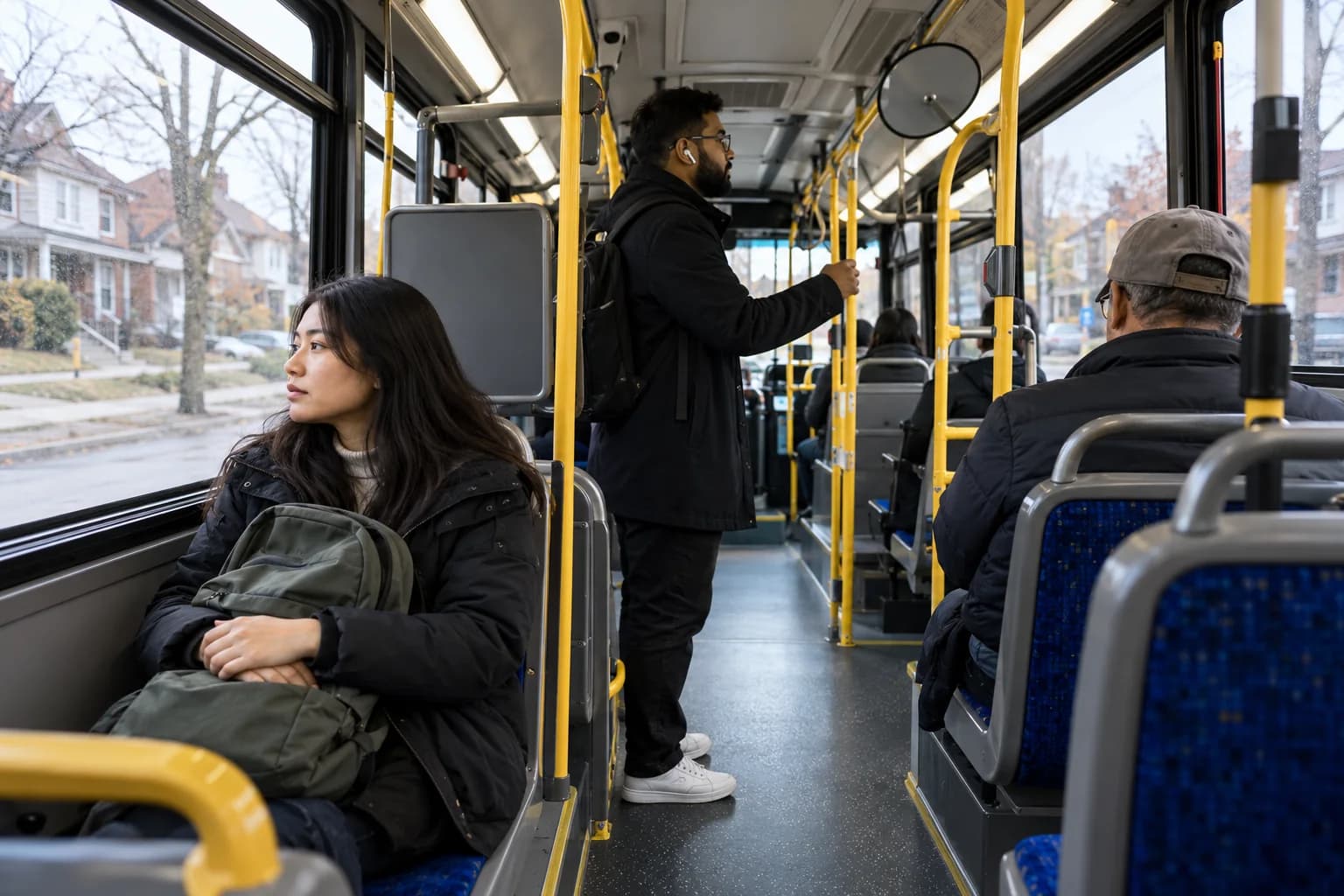
A monthly transit pass is $85 in Victoria and gasoline is $1.97 a litre. Vancouver is $117 for a pass and $2.00 a litre.
| Getting around | Victoria | Vancouver | Calgary | Halifax | Toronto |
|---|---|---|---|---|---|
| Single transit fare | $3.00 | $3.50 17% higher than Victoria | $4.00 33% higher than Victoria | $3.00 | $3.35 12% higher than Victoria |
| Monthly pass | $85.00 | $117.20 38% higher than Victoria | $126.00 48% higher than Victoria | $90.00 6% higher than Victoria | $156.00 84% higher than Victoria |
| Taxi start | $3.85 | $3.80 1% lower than Victoria | $4.50 17% higher than Victoria | $4.70 22% higher than Victoria | $4.25 10% higher than Victoria |
| Taxi per mile | $3.60 | $3.67 2% higher than Victoria | $3.09 14% lower than Victoria | $2.82 22% lower than Victoria | $2.82 22% lower than Victoria |
| Gasoline per litre | $1.97 | $2.00 2% higher than Victoria | $1.69 14% lower than Victoria | $1.85 6% lower than Victoria | $1.76 11% lower than Victoria |
| New VW Golf or similar | $39,290 | $39,000 1% lower than Victoria | $39,580 1% higher than Victoria | $39,580 1% higher than Victoria | $37,000 6% lower than Victoria |
| New Toyota Corolla or similar | $29,589 | $30,009 1% higher than Victoria | $29,685 | $31,014 5% higher than Victoria | $30,251 2% higher than Victoria |
| Driving 1,000 km a month: fuel plus insurance | $344 | $347 1% higher than Victoria | $294 15% lower than Victoria | $284 17% lower than Victoria | $339 1% lower than Victoria |
| Typical annual car insurance (published range; % uses the midpoint) | $1,800 to $2,200 | $1,800 to $2,200 | $1,500 to $1,900 15% lower than Victoria | $1,000 to $1,800 30% lower than Victoria | $1,700 to $2,650 9% higher than Victoria |
Percentages show the gap from Victoria: red is higher, green is lower (flipped for pay lines).
Numbeo transport prices. Driving cost assumes 1,000 km a month at 9 L/100 km plus the midpoint of the typical annual insurance range, which is published as a range because sources disagree (WealthNorth, Rates.ca and others, 2025-2026) and depends on driver, vehicle and postal code. Excludes the car payment, parking and maintenance.
BC Transit's monthly pass is $85, the cheapest of the nine cities, though bus coverage is thinner than SkyTrain. Gas is $1.97 a litre, second only to Vancouver. Cycling is the city's best-value transport, with the Galloping Goose Trail.
See also: transportation costs in Toronto.
Restaurants, coffee and drinks in Victoria
An inexpensive restaurant meal is $27.50 and a three-course dinner for two at a mid-range restaurant is $100 in Victoria, against $25.00 and $100 in Vancouver. A pint is $8.00 and a cappuccino $6.12.

| Eating and drinking out | Victoria | Vancouver | Calgary | Halifax | Toronto |
|---|---|---|---|---|---|
| Inexpensive restaurant meal | $27.50 | $25.00 9% lower than Victoria | $25.00 9% lower than Victoria | $25.00 9% lower than Victoria | $25.00 9% lower than Victoria |
| Mid-range dinner for two, three courses | $100.00 | $100.00 | $99.01 1% lower than Victoria | $102.50 3% higher than Victoria | $110.00 10% higher than Victoria |
| Fast-food combo | $15.50 | $15.00 3% lower than Victoria | $15.00 3% lower than Victoria | $15.00 3% lower than Victoria | $15.00 3% lower than Victoria |
| Pint of domestic draught | $8.00 | $8.00 | $7.00 13% lower than Victoria | $8.00 | $9.00 13% higher than Victoria |
| Imported beer, 12 oz | $9.50 | $9.00 5% lower than Victoria | $8.00 16% lower than Victoria | $9.00 5% lower than Victoria | $10.00 5% higher than Victoria |
| Cappuccino | $6.12 | $5.60 8% lower than Victoria | $5.30 13% lower than Victoria | $6.14 | $5.70 7% lower than Victoria |
| Soft drink, 12 oz | $3.24 | $2.97 8% lower than Victoria | $2.78 14% lower than Victoria | $3.26 1% higher than Victoria | $2.94 9% lower than Victoria |
Percentages show the gap from Victoria: red is higher, green is lower (flipped for pay lines).
Numbeo restaurant prices before tax and tip. Add provincial sales tax (5% to 15%) and a 15% to 20% tip on a sit-down meal.
A mid-range dinner for two is $100, an inexpensive meal $27.50, and a cappuccino $6.12. BC's PST adds 7% on many restaurant bills.
See also: restaurant prices in Alberta.
Utilities, phone and internet in Victoria
Electricity, heat and water for a 915 sq ft apartment, a mobile plan and home internet come to $298 a month in Victoria, 23% more than Vancouver ($242). That is sixth most expensive of nine Canadian cities for monthly bills.
| Monthly bills | Victoria | Vancouver | Calgary | Halifax | Toronto |
|---|---|---|---|---|---|
| Electricity, heat, water, garbage (915 sq ft) | $147.57 | $116.32 21% lower than Victoria | $231.39 57% higher than Victoria | $202.88 37% higher than Victoria | $171.96 17% higher than Victoria |
| Mobile plan, 10GB or more | $62.48 | $52.26 16% lower than Victoria | $54.42 13% lower than Victoria | $60.14 4% lower than Victoria | $46.20 26% lower than Victoria |
| Home internet, 60 Mbps or more | $87.51 | $73.59 16% lower than Victoria | $72.09 18% lower than Victoria | $95.03 9% higher than Victoria | $68.31 22% lower than Victoria |
| Total | $297.56 | $242.17 19% lower than Victoria | $357.90 20% higher than Victoria | $358.05 20% higher than Victoria | $286.47 4% lower than Victoria |
Percentages show the gap from Victoria: red is higher, green is lower (flipped for pay lines).
Utilities are $148 a month, close to Vancouver's, with a mild climate keeping heating low. Internet at $88 and mobile at $62 are above the national average.
See also: utility bills in Nova Scotia.
Hotels and travel in Victoria
Victoria is a seasonal hotel market: Destination Greater Victoria reported August 2025 occupancy of 94.3% with an average daily rate above $396, while April 2025 averaged $244. Full-year 2025 occupancy was 78.2%, with ADR up 6.5%.
| Hotels | Victoria | Vancouver | Calgary | Halifax | Toronto |
|---|---|---|---|---|---|
| Average daily rate, latest published | $244 | $284 16% higher than Victoria | $188 23% lower than Victoria | $279 14% higher than Victoria | $261 7% higher than Victoria |
| Two-night weekend stay | $488 | $568 16% higher than Victoria | $375 23% lower than Victoria | $558 14% higher than Victoria | $522 7% higher than Victoria |
| Basis | April 2025 STR (August 2025 peak: $396) | 2025 full year, Avison Young (September 2026 monthly: $373, CoStar) | 2025 full year, Avison Young | 2026 CoStar outlook estimate (no published 2025 actual) | 2025 full year, Avison Young (August 2026 monthly: $308, CoStar) |
Percentages show the gap from Victoria: red is higher, green is lower (flipped for pay lines).
Average daily rate (ADR) is what hotels actually collect per occupied room across the whole market, not the cheapest listing, and the periods differ by city because published data does. Sources: Avison Young 2025 market review, CoStar (formerly STR) monthly releases, Destination Greater Victoria. Do not compare a 2025 average with a 2026 peak month.
Summer weekends and the cruise season are the peak. The off-season (November to March) is far cheaper, and the BC Ferries crossing from Vancouver adds a vehicle fare.
See also: hotel rates in Ontario.
Movies, entertainment and things to do in Victoria
A new-release movie ticket is $15.00 in Victoria, a gym membership $58 a month, and a night out for two (dinner, two movies, two pints) about $146, compared with $151 in Vancouver.
| Leisure and shopping | Victoria | Vancouver | Calgary | Halifax | Toronto |
|---|---|---|---|---|---|
| Cinema ticket, new release | $15.00 | $17.50 17% higher than Victoria | $20.00 33% higher than Victoria | $16.00 7% higher than Victoria | $18.00 20% higher than Victoria |
| Monthly gym membership | $58.33 | $55.93 4% lower than Victoria | $70.42 21% higher than Victoria | $52.50 10% lower than Victoria | $51.59 12% lower than Victoria |
| Tennis court, 1 hour on a weekend | $24.25 | $17.59 27% lower than Victoria | $25.88 7% higher than Victoria | $25.62 6% higher than Victoria | $33.20 37% higher than Victoria |
| Night out: dinner for two, two movie tickets, two pints | $146 | $151 3% higher than Victoria | $153 5% higher than Victoria | $151 3% higher than Victoria | $164 12% higher than Victoria |
| Jeans (Levi's 501 or similar) | $77.30 | $81.66 6% higher than Victoria | $82.13 6% higher than Victoria | $84.70 10% higher than Victoria | $74.21 4% lower than Victoria |
| Summer dress, chain store | $61.43 | $46.87 24% lower than Victoria | $56.38 8% lower than Victoria | $46.73 24% lower than Victoria | $56.33 8% lower than Victoria |
| Nike running shoes | $129.20 | $134.00 4% higher than Victoria | $129.41 | $141.25 9% higher than Victoria | $139.86 8% higher than Victoria |
| Men's leather business shoes | $148.91 | $134.65 10% lower than Victoria | $157.08 5% higher than Victoria | $161.54 8% higher than Victoria | $174.28 17% higher than Victoria |
Percentages show the gap from Victoria: red is higher, green is lower (flipped for pay lines).
Numbeo prices. Cinema is a standard adult seat for an international release; premium and online booking fees are extra. Prices for museums, parks, festivals and sport vary by season and event, so check the venue before you budget a day out.
Things to do in Victoria
- The Inner Harbour, Beacon Hill Park and Fisherman's Wharf, all free.
- Butchart Gardens and Craigdarroch Castle.
- Whale watching tours from the harbour.
- Goldstream Provincial Park and the Sooke Potholes.
- The Galloping Goose cycling trail.
- Oak Bay and Cook Street Village for cafes and shops.
- Afternoon tea at the Empress, an expensive classic.
A movie ticket is $15.00, among the cheapest of the nine cities, a gym $58 a month, and a night out for two about $146.
See also: movie and entertainment prices in Canada.
Childcare, schools and raising a family in Victoria
BC fees vary by operator; ask for the CCFRI-reduced rate. Private full-day preschool averages $1,238 a month in Victoria in Numbeo's sample, versus $1,500 in Vancouver; most families pay far less through regulated childcare.

| Family costs | Victoria | Vancouver | Calgary | Halifax | Toronto |
|---|---|---|---|---|---|
| Private full-day preschool, monthly | $1,238 | $1,500 21% higher than Victoria | $779 37% lower than Victoria | $1,344 9% higher than Victoria | $1,051 15% lower than Victoria |
| International primary school, yearly | $32,578 | $28,653 12% lower than Victoria | $22,451 31% lower than Victoria | $21,508 34% lower than Victoria | $33,506 3% higher than Victoria |
| 3 bedroom outside the centre, monthly | $3,247 | $3,506 8% higher than Victoria | $2,340 28% lower than Victoria | $2,755 15% lower than Victoria | $3,015 7% lower than Victoria |
| Family of four, monthly budget (no childcare or car) | $5,805 | $6,040 4% higher than Victoria | $5,031 13% lower than Victoria | $5,334 8% lower than Victoria | $5,512 5% lower than Victoria |
Percentages show the gap from Victoria: red is higher, green is lower (flipped for pay lines).
Private preschool and school fees are Numbeo samples. Most Canadian families use regulated childcare, whose fees are set by the province and are far lower than private preschool. Regulated fees: CCPA, The $10-a-day divide: child care fees in Canada in 2026.
BC fees vary by operator; ask for the fee-reduced rate. Private preschool is $1,238 a month in the Numbeo sample. Victoria skews older, and schools in some municipalities are under enrolment pressure.
See also: childcare costs in Vancouver.
Income tax, sales tax and take-home pay in Victoria
On a $100,000 salary a British Columbia resident pays about $20,295 in federal and provincial income tax (20.3%), plus roughly $5,770 in CPP and EI, for take-home near $73,935.
| Salary | British Columbia | Alberta | Nova Scotia | Ontario |
|---|---|---|---|---|
| Income tax on $60,000 | $9,015 (15.0%) | $9,171 (15.3%) | $12,205 (20.3%) | $9,417 (15.7%) |
| Income tax on $100,000 | $20,295 (20.3%) | $21,347 (21.3%) | $27,060 (27.1%) | $21,521 (21.5%) |
| Income tax on $150,000 | $38,433 (25.6%) | $38,410 (25.6%) | $47,872 (31.9%) | $41,626 (27.8%) |
| Take-home on $100,000 after income tax, CPP and EI | $73,935 | $72,883 | $67,170 | $72,709 |
| Sales tax | 5% GST + 7% PST | 5% GST only | 14% HST | 13% HST |
2026 federal and provincial brackets, basic personal amount only, single filer on employment income. Ontario includes the surtax and Ontario Health Premium; Quebec includes the 16.5% federal abatement. CPP and EI are approximated at 2026 rates ($5,770 at $100,000) and are not deducted from the percentages. Quebec uses QPP and QPIP instead, so its take-home is not shown. Sources: CRA, KPMG, TaxTips.ca.
BC's PST (7%) plus GST make 12% on most goods. Income tax at $100,000 is $20,295, $1,226 less than Ontario.
See also: income tax in Calgary.
Average salary and minimum wage in Victoria
The average British Columbia employee earned about $70,115 a year ($1,348.36 a week) in March 2026, and the minimum wage is $18.25 an hour (since June 1, 2026), or $37,960 a year full-time. After tax that minimum-wage worker keeps about $2,575 a month, against $3,345 for a modelled single budget even outside the centre, a shortfall of $770.
| Earnings | Victoria | Vancouver | Calgary | Halifax | Toronto |
|---|---|---|---|---|---|
| Average weekly earnings (province, March 2026) | $1,348.36 | $1,348.36 | $1,371.07 2% higher than Victoria | $1,210.83 10% lower than Victoria | $1,368.71 2% higher than Victoria |
| Average yearly earnings (weekly x 52) | $70,115 | $70,115 | $71,296 2% higher than Victoria | $62,963 10% lower than Victoria | $71,173 2% higher than Victoria |
| Average monthly net pay reported by Numbeo | $4,525 | $5,132 13% higher than Victoria | $4,372 3% lower than Victoria | $3,900 14% lower than Victoria | $5,022 11% higher than Victoria |
| Minimum wage per hour | $18.25 | $18.25 | $15.00 18% lower than Victoria | $17.00 7% lower than Victoria | $17.95 2% lower than Victoria |
| Full-time minimum wage, gross a year (2,080 hours) | $37,960 | $37,960 | $31,200 18% lower than Victoria | $35,360 7% lower than Victoria | $37,336 2% lower than Victoria |
| Hours of minimum-wage work to pay a city-centre 1 bedroom | 119 hours | 137 hours 15% higher than Victoria | 116 hours 3% lower than Victoria | 121 hours 1% higher than Victoria | 126 hours 6% higher than Victoria |
| Full-time minimum wage, take-home a month | $2,575 | $2,575 | $2,192 15% lower than Victoria | $2,326 10% lower than Victoria | $2,515 2% lower than Victoria |
Percentages show the gap from Victoria: red is higher, green is lower (flipped for pay lines).
Average weekly earnings: Statistics Canada, Survey of Employment, Payroll and Hours, March 2026 (all employees, including overtime, seasonally adjusted). These are means, so they run above what a typical worker earns; Statistics Canada’s city-level median is lower than the provincial mean. Minimum wages are the general adult rates in force on October 25, 2026 (Ontario $17.95 from October 1; verify before payroll decisions). The US and Australian minimums are converted at C$1 = US$0.702 and A$1.011; US states and some cities set higher rates. “Numbeo net pay” is a crowd-sourced sample.
See also: wages and minimum wage in Toronto.
Can you live in Victoria on your salary?
On $60,000 a year a single person in Victoria takes home about $3,887 a month. A city-centre one bedroom puts the modelled budget at $3,671, which leaves $216 (manageable). Moving outside the centre leaves $542 (manageable). Adjust the calculator below to your own income, household and choices.
Household
Where you live
Getting around
Enter income as
Manageable in Victoria
You cover the budget and keep a small cushion, but a surprise bill would hurt. After tax you keep about $3,887 a month against a modelled budget of $3,671, which leaves $216.
Take-home pay
$3,887/mo
$9,015 income tax and $4,340 payroll deductions a year
Monthly budget
$3,671/mo
Rent, bills, food, transport, fun, family
Left over
$216/mo
Before saving, debt payments and travel
Where the money goes
- Rent$2,179
- Utilities, phone, internet$298
- Groceries$494
- Transit$85
- Eating and drinking out$306
- Gym and movies$103
- Clothing and shoes$46
- Dental, vision, prescriptions$60
- Household, subscriptions, personal care$100
Rent is 44% of gross income here, above the 30% guideline lenders and landlords use. To keep 15% of take-home after this budget in Victoria you would need roughly $69,000 a year.
How this works: take-home uses 2026 federal and provincial income tax plus CPP and EI (Quebec uses QPP and QPIP; the US figure adds Social Security, Medicare and a 4% state tax; Australia adds the Medicare levy). Couples and families are two equal earners. Expenses use October 2026 Numbeo prices with our assumptions for clothing, health costs ($60 an adult), household items, and a car financed over five years at 6%. It ignores the Canada Child Benefit, GST credit, RRSP deductions and employer benefits, so real take-home may be higher.
What each salary leaves you in Victoria
| Gross income | Take-home (single, monthly) | Single left over | Couple left over | Family left over |
|---|---|---|---|---|
| $40,000 a year | $2,698 | -$973 (Not enough) | -$1,854 (Not enough) | -$4,283 (Not enough) |
| $50,000 a year | $3,305 | -$366 (Not enough) | -$1,247 (Not enough) | -$3,676 (Not enough) |
| $60,000 a year | $3,887 | $216 (Manageable) | -$640 (Not enough) | -$3,069 (Not enough) |
| $75,000 a year | $4,699 | $1,028 (Comfortable) | $270 (Manageable) | -$2,159 (Not enough) |
| $100,000 a year | $6,161 | $2,490 (Comfortable) | $1,787 (Comfortable) | -$642 (Not enough) |
| $150,000 a year | $8,816 | $5,145 (Comfortable) | $4,575 (Comfortable) | $2,146 (Comfortable) |
Left over is monthly take-home minus the modelled budget, before saving, debt payments and travel. Single: one-bedroom in the city centre. Couple: the figure is household income from two equal earners, one-bedroom in the centre. Family: household income from two earners, three-bedroom outside the centre, one child in regulated childcare. Everyone uses transit.
Can you live on $3,000 a month in Victoria?
Most searches for a monthly figure mean pay after tax. The table converts each monthly take-home into the gross salary that produces it in Victoria, then shows what a single person has left after rent in the centre or outside it.
| Monthly take-home | Gross salary needed | Left over, outside centre | Left over, city centre |
|---|---|---|---|
| $2,500 a month | $36,732 | -$845 (Not enough) | -$1,171 (Not enough) |
| $3,000 a month | $44,972 | -$345 (Not enough) | -$671 (Not enough) |
| $3,500 a month | $53,296 | $155 (Very tight) | -$171 (Not enough) |
| $4,000 a month | $62,110 | $655 (Comfortable) | $329 (Manageable) |
| $5,000 a month | $80,331 | $1,655 (Comfortable) | $1,329 (Comfortable) |
See also: what a salary buys in Alberta.
What salary do you need to live in Victoria?
A single person in Victoria needs about $51,000 a year to break even outside the centre and about $69,000 to rent in the city centre and still keep 15% of take-home. A couple needs $85,000 in household income and a family of four $135,000.
| Gross salary needed | Victoria |
|---|---|
| Single, bare minimum (outside the centre, transit, break even) | $51,000 |
| Single, comfortable (city centre, transit, 15% left) | $69,000 |
| Single with a car (outside the centre, 15% left) | $81,000 |
| Couple, comfortable (household income, centre, transit, 15% left) | $85,000 |
| Family of four, comfortable (household income, outside the centre, one child in childcare, 15% left) | $135,000 |
| Rent at 30% of gross pay (single, centre one-bedroom) | $88,000 |
Gross pay before tax, rounded up to the nearest $1,000, from the same model as the calculator. “Comfortable” means 15% of after-tax income remains after the budget for saving, debt and travel. Couples and families assume two equal earners. A car adds a loan on a new compact (10% down, 6%, five years), fuel for 1,000 km a month, insurance and upkeep.
See also: salary needed in Nova Scotia.
Is $100,000 a good salary in Victoria?
$100,000 is about 143% of the british columbia average of $70,115, which makes it above average in Victoria. A single person renting in the city centre on $100,000 keeps about $6,161 a month after tax and has $2,490 left over after the modelled budget (comfortable).
| Salary | Versus the british columbia average | How it ranks | Single left over (centre) |
|---|---|---|---|
| $40,000 a year | 57% of average | Below average | -$973 (Not enough) |
| $60,000 a year | 86% of average | Around average | $216 (Manageable) |
| $75,000 a year | 107% of average | Around average | $1,028 (Comfortable) |
| $100,000 a year | 143% of average | Above average | $2,490 (Comfortable) |
| $150,000 a year | 214% of average | High | $5,145 (Comfortable) |
| $200,000 a year | 285% of average | Very high | $7,534 (Comfortable) |
The average is a mean from Statistics Canada (provinces) or implied by Numbeo’s net pay (countries), so a typical worker earns less than it. A salary that is “good” against the average can still be tight for one person who rents downtown or for a family on a single income; use the calculator above for your own situation.
See also: salary benchmarks in Ontario.
Why Victoria costs what it does
- Limited land and strong retiree and government demand.
- Ferry-dependent supply chains raise grocery prices.
- Low property tax and cheap transit.
- Thin wage premium over other BC cities.
- Seasonal tourism raises hotel and restaurant prices in summer.
Is Victoria right for your budget?
It suits you if
- You are retired, work for the provincial government, or work remotely.
- You want mild winters and outdoor access.
- You can live without a car.
Think twice if
- You expect Vancouver-level jobs and pay.
- You need a cheap grocery bill.
- You depend on frequent trips to the mainland.
The bottom line
Victoria is a lifestyle city that costs nearly as much as Vancouver for housing and more for groceries.
Choose it for the climate, the harbour and the slower pace, not to save money.