Buying Guides · Updated September 7, 2026 · 16 min read
First Time Home Buyer in Vancouver: The Complete 2026 Guide
Get matched with a buyer’s agent who has closed first time purchases on your streets this year.
Follow our guides as a preferred source in Google Search
A first time home buyer in Vancouver in 2026 typically lands a condo around $771,000, a household income of about $155,000 to $180,000 with the minimum down, and roughly $62,500 cash to close. Ranking pages that say property transfer tax is $0 under $835,000 are wrong: the exemption is $8,000, not a wipe.
The CMA average around $1.16 million and the $1,099,100 benchmark blend detached homes near $2 million with the condo you can actually close. They are the wrong numbers for most first time buyers.
How to choose a buyer’s agent as a first timer
Hire someone who has closed first time purchases on your streets or buildings in the last 12 months, who will model cash to close before you bid, and who will not demand a six-month exclusive on day one.
| The agent you want | Walk away | |
|---|---|---|
| Track record | Named buyer deals on your streets or buildings in the last year | I work the whole Lower Mainland |
| First conversation | Cash to close on a real listing: PTT after the $8,000 exemption, a reserve | Which neighbourhoods are hot |
| Offers | A sitting 2026 West End condo and an east-side house with eight showings are different sports | One script: bully offer, no conditions |
| Loyalty | They work for you. The listing agent is not also your agent | We can double-end it |
A buyer agency agreement is normal; start short. You typically do not pay your own agent on a Vancouver resale. The listing brokerage offers a cooperating commission. Browse the Vancouver city page or get matched.
Get the mortgage straight before you tour
A pre-approval is a rate hold and a stress-test check, not a licence to tour. Get it from a broker before Saturday open houses.
| Mortgage broker | Your bank | |
|---|---|---|
| What they shop | Multiple lenders, including ones that do not take walk-in traffic | Their own products |
| Who it is for | Insured condos, self-employed, or a file that is not a clean T4 | A simple file and a branch you actually want to keep |
| What you get | A letter you can attach to an offer, and a rate hold of 90 to 120 days | The same letter, from one desk, often uncompared |
- Lenders qualify you at the greater of your contract rate plus two percent or 5.25 percent.
- Strata fees and property tax count toward the ~39 percent gross debt service cap. Other debts count toward total debt service.
- A 30-year insured amortization can squeeze you into the qualifying payment. It costs more interest.
- The lender still has to like the building. Income approval is not approval of a thin contingency reserve.
Can you actually afford to buy in Vancouver?
About $155,000 to $180,000 of household income qualifies a typical Vancouver condo with the minimum down. The $1.16 million MLS average with 20 percent down still takes well above $220,000.
| Purchase | Typical price | Income that usually qualifies |
|---|---|---|
| Entry condo (West End, Hastings-Sunrise, Marpole) | $650,000 to $720,000 | About $140,000 to $165,000 |
| Typical Vancouver condo | About $771,000 | About $155,000 to $180,000 |
| MLS average home, 20% down | About $1,160,000 | Well above $220,000 |
| Detached inside the city | About $2 million | Family equity, or a different purchase |
Stress test, Vancouver’s 0.31 percent property tax, and a 39 percent gross debt service cap. Condo examples include typical fees.
Under about $140,000 with no family help or a large FHSA, you are not buying inside Vancouver this year without stretching past the stress test. The alternatives are waiting, a Burnaby, New Westminster, or Surrey purchase, or renting. The full city comparison lives in Vancouver vs Toronto and Vancouver vs Calgary.
Down payment rules and CMHC insurance
Five percent on the first $500,000, 10 percent on the next million, 20 percent above $1.5 million. On a $771,000 condo that is about $52,100. Below 20 percent you pay CMHC. British Columbia does not charge PST on that premium, so there is no extra cash line the way Ontario and Quebec add one.
The premium itself (4.0 / 3.1 / 2.8 percent of the mortgage, depending on down payment) is added to the loan. Most first time buyers should use the minimum and keep a reserve rather than stretching to 20 percent.
How much cash do you need to close?
On a typical $771,000 condo with the minimum down, plan on about $62,500: $52,100 down, about $5,420 of property transfer tax after the first time exemption, and $5,000 for the rest.
| Line item | Minimum down on a $771K condo | 20% path on a $771K condo |
|---|---|---|
| Down payment | About $52,100 | About $154,200 |
| Property transfer tax after exemption | About $5,420 | About $5,420 |
| CMHC premium PST | $0 in BC | $0 |
| Legal, title, inspection, adjustments | About $5,000 | About $5,000 |
| Cash to close, all in | About $62,500 | About $164,600 |
Run the cash-to-close number on your price
Buyer type
Minimum on this price is $52,100 (6.8%)
$64,390 cash to close
- Down payment
- $53,970
- Property transfer tax after exemption
- $5,420
- CMHC premium PST (BC)
- $0
- Legal, title, inspection
- $5,000
CMHC premium itself is added to the mortgage when you put under 20 percent down. British Columbia does not charge PST on that premium, so the cash line is $0. Legal line is a typical bundle, not a quote. Movers, furniture, and elevator bookings sit on top.
Furniture, movers, and first-month extras are not in that table. Budget another $3,000 to $8,000 if the unit is empty. Run the British Columbia closing costs calculator before you offer.
The first time buyer rebate stack
Two things actually change whether you can close: an FHSA you already filled, and the GST rebate on a qualifying new build. The BC property transfer tax exemption is $8,000, not a wipe of the whole bill.
| Program | What it is worth | The catch |
|---|---|---|
| First Home Savings Account | $8,000 a year, $40,000 lifetime per person | You had to fill it in advance. A couple can stack two accounts to $80,000. |
| RRSP Home Buyers' Plan | Up to $60,000 per person, repayable over 15 years | Miss a repayment and it becomes taxable income. |
| First Time Home Buyers' Tax Credit | Up to $1,500 | Claimed after completion, not as cash on completion day. |
| BC first time PTT exemption | Up to $8,000 at registration | Covers tax on the first $500,000 only. Occupy within 92 days and stay a year. |
| Newly built home PTT exemption | Can wipe PTT on new construction to $1.1 million | New construction only. Separate from the first time exemption. Consensus, not a secret. |
| Federal GST rebate on new homes | Up to 5% of price to $1 million, max $50,000 | Agreements after March 19, 2025 and before 2031. Resale gets none. |
What each incentive is actually worth
The PTT exemption is $8,000 on the first $500,000 of value, not a wipe. Ranking pages that say PTT is $0 under $835,000 are wrong. The GST rebate is 5 percent, not Ontario’s 13 percent HST window. The FHSA is tax-free down payment room you had to fill in advance.
You must occupy the home as your principal residence, and neither you nor your spouse can have owned a principal residence anywhere. A co-buyer who has owned before can kill the exemption on their share. Your lawyer files it at registration.
British Columbia’s property transfer tax
BC charges 1 percent on the first $200,000 and 2 percent up to $2 million. On a $771,000 condo a first time buyer still owes about $5,420 after the $8,000 exemption. On $1 million, about $12,000.
| Purchase price | Gross PTT | Net for a first time buyer |
|---|---|---|
| $650,000 (West End condo) | About $11,000 | About $3,000 |
| $771,000 (typical condo) | About $13,420 | About $5,420 |
| $1,000,000 | About $18,000 | About $18,000 (exemption is $0) |
| $2,000,000 (typical detached) | About $38,000 | About $38,000 (over the $860,000 cliff) |
BC statutory brackets. First time exemption of $8,000 on homes to $835,000, then a phase-out to $0 at $860,000. Occupy within 92 days and stay a year.
Leave the City of Vancouver and the tax itself does not disappear. Burnaby, New Westminster, and Surrey still pay the same provincial PTT. The saving is the cheaper sticker, not a missing municipal layer. There is no Toronto-style double tax here.
Why PTT is not $0 under $835,000
The first time exemption is $8,000 on the first $500,000 of value, not a wipe of the whole bill. On a typical $771,000 condo you still pay about $5,420. At $835,000 you pay about $6,700. At $860,000 the exemption is $0 and the bill is about $15,200.
| Home value | Gross PTT | Net after the $8,000 exemption |
|---|---|---|
| $500,000 | About $8,000 | $0 |
| $771,000 (typical condo) | About $13,420 | About $5,420 |
| $835,000 (exemption still full) | About $14,700 | About $6,700 |
| $860,000 (exemption gone) | About $15,200 | About $15,200 |
Ranking pages that say first time buyers pay no property transfer tax under $835,000 are reading the threshold as a wipe. It is not. The $835,000 figure is the top of the band where you still get the full $8,000. Everything above $500,000 is taxed at the ordinary 2 percent rate, and you keep only that $8,000 credit. Cross $860,000 and the credit is gone. A newly built home can use a separate exemption up to $1.1 million. That is a different program, not the first time table.
Government of British Columbia, First Time Home Buyers’ Program current amount, updated December 3, 2025. The exemption is $8,000 on the first $500,000 of fair market value.
Keep the exemption: occupy in 92 days, stay a year
The first time exemption is not finished at registration. You must occupy the home as your principal residence within 92 days, and you must stay for one year. A false declaration can cost you a penalty equal to the exemption you claimed. You also have to have never owned a principal residence anywhere, and have lived in BC for 12 months or filed two BC tax returns in the last six years.
| Rule | What it requires | What kills it |
|---|---|---|
| First time test | Never owned a principal residence anywhere, including outside Canada | A spouse or co-buyer who has owned before, on their share |
| BC residency | Lived in BC for 12 months, or two BC income-tax returns in the last six years | A new arrival with no BC returns and under 12 months in the province |
| Occupy and stay | Move in within 92 days of registration and stay a year | Renting it out, leaving it empty, or flipping inside the year |
Your lawyer files the exemption at the Land Title Office. If you later fail the occupancy or stay test, the province can assess the tax you avoided plus a penalty equal to that exemption. Do not let anyone tell you the 92-day clock is a soft guideline. It is the condition that keeps the $8,000.
Government of British Columbia, First Time Home Buyers’ Program. Occupancy within 92 days, one-year stay, never-owned-principal-residence test, and BC residency (12 months or two returns in six years).
What it costs every month after you buy
A typical condo at $771,000 with the minimum down runs about $4,893 a month: mortgage about $4,138, tax about $200, fees $490, insurance $65. A one bedroom rents for about $2,600. Buying wins on a five-to-seven-year horizon, not on this month’s cash flow.
What the monthly bill actually looks like
$4,882 per month
A $2,600 one bedroom rent is the comparison most first timers are making. Hydro sits on top if the building meters it separately.
Canadian semi-annual compounding, 25year amortization. Under 20 percent down, the CMHC premium is added to the loan. Qualifying uses the stress test, which is stricter than this payment. Vancouver’s property tax rate is about 0.31 percent.
Vancouver’s property tax rate is about 0.31 percent, among the lowest of any large Canadian city. The monthly tax on a $771,000 condo is about $200. That is the offset, not a cheap mortgage. CMHC purpose-built two-bedroom rent sits near $2,400; asking one-bedroom rents on this site are about $2,600. Run the Vancouver rent vs own calculator if the horizon is the real question.
What a first time buyer can actually buy
A condo, usually around $771,000. West End, Hastings-Sunrise, Marpole, and Commercial Drive are the streets that actually close at that number. A Kitsilano or west-side house is a different purchase.
- Condos around $650,000 to $780,000: West End, Hastings-Sunrise, Marpole, Kensington-Cedar Cottage, Commercial Drive, a smaller downtown unit.
- Condos $800,000 to $950,000: Mount Pleasant, Fairview, Olympic Village. Two incomes, not a stretch of the minimum-down file.
- Houses $1.6 million and up: east-side character, then the west side. Two incomes or family help, not a typical first purchase.
Streets and Walk Scores live in the best neighbourhoods in Vancouver guide. Filter for first time buyers and a condo budget. Do not use the $1,099,100 benchmark or the $1.16 million MLS average as your shopping list.
The buying process, in order
Agent and pre-approval first, then tour. Skip this sequence if you are in a sales centre; that is a builder contract. Vancouver closes through a lawyer on a contract of purchase and sale.
- 1
Pick the constraint you will not bend
Commute, outdoor space, or price. You get two. Map a Tuesday 8am door-to-door on SkyTrain before you pick east versus west.
- 2
Tour with a list
Form B early on strata. Inspection budget on houses. Visit at 8am and at 7pm.
- 3
Write the offer for this listing
Sitting condos take conditions. Offer-night houses often do not. Waiving them is a priced risk.
- 4
Firm up, then complete
After conditions are waived you are buying it. Wire cash to close when the lawyer says, not the afternoon before.
Writing and negotiating the offer
An offer is a contract with a clock. Nothing is sold until the seller accepts in writing before that clock runs out. A sign-back is a new offer from them; yours is dead. On a stale condo, negotiate price. On an offer-night east-side house, decide whether you belong in the room.
| Sitting condo | Offer-night house | |
|---|---|---|
| Price | The comps, often under list | At or above list if traffic says so |
| Irrevocable | 24 to 48 hours | A few hours, often that evening |
| Conditions | Keep financing, Form B, usually a suite inspection | Each one you keep can lose the bid |
| Deposit | 5 percent, certified, within 24 hours of acceptance | Same, and have it liquid before you write |
- BCREA contract of purchase and sale forms are the default. Do not improvise a contract from an Ontario agreement of purchase and sale.
- Bully offers: only if the bid is strong enough to cancel their process. Do not waive a house inspection or a Form B to do this. A sitting condo does not need a bully.
- Escalation clauses tell them your ceiling. Skip them unless your agent has a reason.
- Conditions are waived in writing, typically about five business days. After that the deposit is at risk if you cannot complete.
- If you bid above the lender’s appraisal, you cover the gap in cash.
- A first home should be vacant. Tenanted listings make you a landlord on day one, under BC tenancy law.
What are you looking at?
A sitting West End condo and an offer-night house east of Main are different sports. Pick the listing, then pick the offer.
Home inspections and the strata Form B
Keep the inspection on a house unless you can absorb a five-figure surprise in cash. On a Vancouver condo the Form B Information Certificate usually matters more, because the expensive failures live in the common property, not the suite.
| House | Strata | |
|---|---|---|
| What you are inspecting | Roof, foundation, electrical, plumbing, HVAC, moisture | The unit. Common property lives in the Form B and depreciation report |
| Typical cost | $400 to $600, extras for sewer camera or WETT | $350 to $500 for the suite, plus the Form B fee |
| Keep the condition? | Yes, unless you can absorb a five-figure surprise | Usually yes in 2026. The Form B still matters more |
A Form B is not an Ontario status certificate with a different name. It is the strata’s snapshot: fees, special levies, parking and locker allocations, bylaw proceedings, and whether the contingency reserve can actually fund the depreciation report. Have your lawyer read it. Walking here is a success. Pre construction has nothing to inspect until occupancy; Homeowner Protection is a warranty, not a pre-offer inspection.
Fixtures vs chattels
If it is not on the included-items and excluded-fixtures schedule, assume it leaves. The listing photos and the hallway conversation do not count.
Guess first. The contract still wins.
8 items
Freestanding fridge and stove
Built-in dishwasher
Dining room chandelier
Curtains, blinds, and rods
Wall-mounted TV
Hardwired EV charger
Washer and dryer
Window air conditioner
British Columbia’s contract of purchase and sale lists included items and excluded fixtures. Your lawyer, not the listing photos, settles the argument. If it is not on the page, do not count on it being there when you get the keys.
The strata traps first time buyers miss
Price is not the cost of the building. Contingency reserve, special levies, the property manager, and whether fees include utilities will move your monthly number more than a $20,000 difference in purchase price.
- Form B Information Certificate: fees, levies, lawsuits, bylaws. Have your lawyer read it. Walking here is a success.
- Depreciation report and the last two AGM packages: deferred envelope work plus a thin reserve is a future levy.
- Who manages it, how long, and whether the council has switched firms. Frequent switches are a smell.
- Parking and lockers are often separate strata lots. Budget extra downtown, or confirm the unit includes one.
- Low fees are not a feature if the parkade has not been waterproofed. You pay monthly or in a lump.
- Leasehold, air space, and older wood-frame envelopes are Vancouver-specific files. A downtown specialist is the wrong hire for a 1970s east-side walk-up.
Moving in
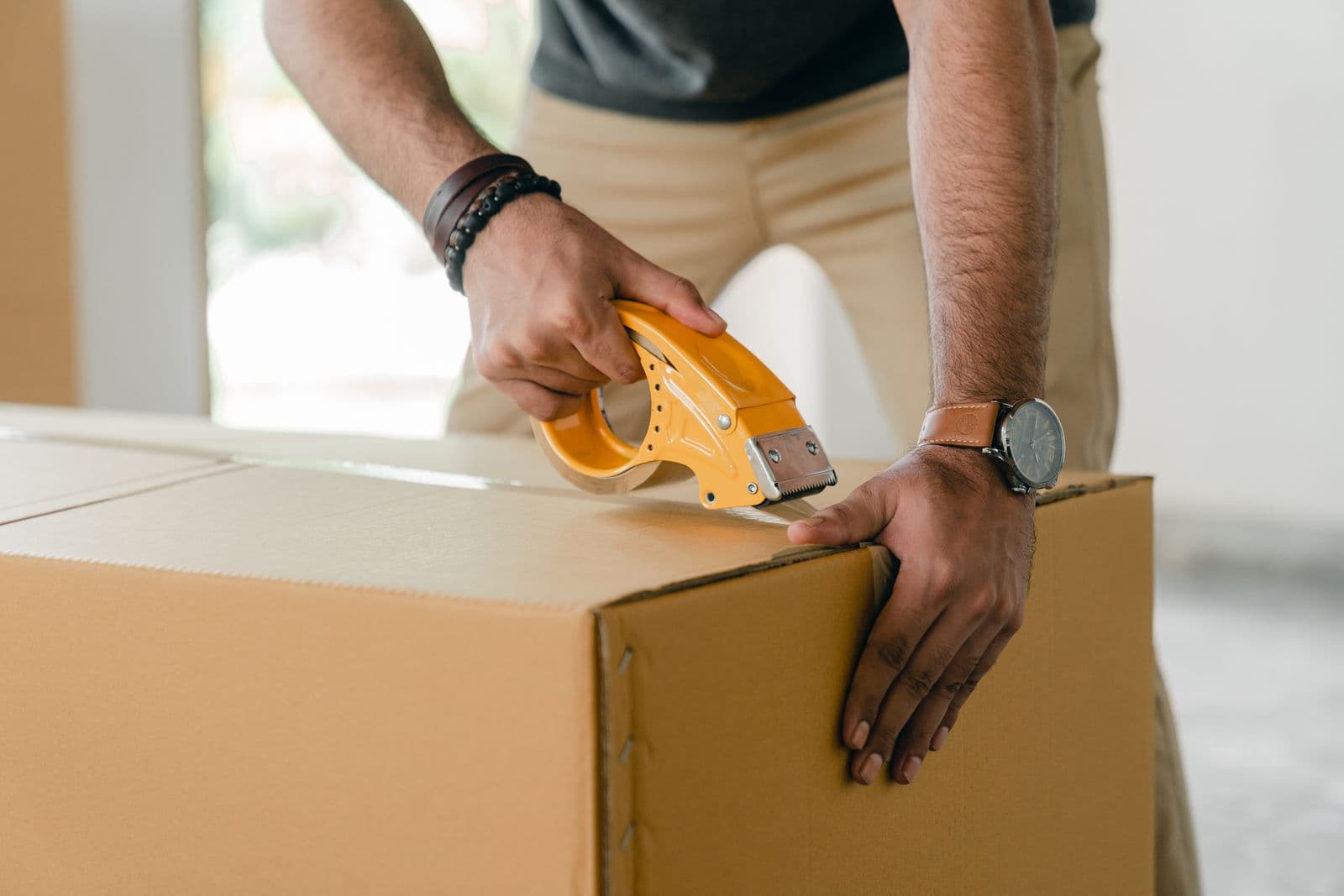
Book the elevator two to four weeks before completion. Budget $3,000 to $8,000 for movers, elevator, and first-month extras on an empty condo. That cash is not in the property transfer tax table.
- Elevator: $100 to $300 plus a refundable damage deposit. Weekend slots vanish in June and September.
- COI: movers issue it, typically $2 million, naming the strata corporation. The cheapest quote often fails this.
- Some towers are weekday-only and give you 15 minutes at the dock.
Cash that is not in the property transfer tax table
$8,100 typical extras
Midpoints, not quotes. Elevator damage deposits are refundable and not shown. A new-build occupancy-to-completion gap can add storage on top of this.
Pre construction is not a regular purchase
Most first time Vancouver buyers should lean resale. Lean pre construction only if you can wait, drip a larger deposit, survive occupancy, still qualify at final completion, and the federal GST rebate is what makes the all-in number work. British Columbia does not have Ontario’s 13 percent HST window, and Homeowner Protection does not pay delayed-occupancy cash.
| Resale | Pre construction | |
|---|---|---|
| What you buy | A home you can walk through | A builder contract, often from plans |
| Deposit | About 5 percent within 24 hours of acceptance | Usually 15 to 20 percent staged over 18 to 24 months |
| Your way out | Financing, inspection, Form B | A cooling-off, then largely firm |
| Closing | One completion. Title, mortgage, and keys the same day | Occupancy first, final completion later |
| Sales tax | GST-exempt | 5% GST. The federal rebate can remove it to $1 million |
Use the cooling-off window. A lawyer reads the builder contract before it expires. The person in the sales centre works for the builder.
Six questions. A lean, not a ruling.
0 of 6
Occupancy is not completion
You often get the keys months before you own the home. Occupancy fees are rent: interest on the unpaid balance, plus estimated tax and maintenance. You are not on title. The mortgage has not started. Property transfer tax is due at final completion.
- Budget occupancy as a second rent. It can run months, or more than a year if registration slips.
- Final completion is when you need the rest of the down payment, property transfer tax, and a mortgage that still has to pass the stress test at then-current rates.
- If the lender values the unit below the contract price at final completion, you cover the gap in cash or you do not complete.
BC warranty is not delay pay
Homeowner Protection living-out is at least $100 a day when warranty repairs make the home uninhabitable. It is not delayed-occupancy compensation. Ontario Tarion caps delay pay at $7,500. Quebec GCR caps relocation help at $6,000. British Columbia does not write that cheque when the occupancy date slips.
| If this happens | What HPO covers | What it does not |
|---|---|---|
| Warranty repairs make the home uninhabitable | Living-out of at least $100 a day while you cannot live there | A slipped occupancy date on a unit that was never finished |
| Occupancy slips three months | Nothing under the living-out rule. That is a contract and delay file | Tarion-style $150 a day, or GCR’s $6,000 relocation cap |
| You already occupy and registration slips a year | Nothing extra for the late title. Occupancy fees still run | A restart of a delay warranty you never had |
| The builder takes your deposit and stalls | Separate deposit and completion coverage under the warranty scheme | Nine months of a second rent |
Do not import Ontario delay numbers into a Vancouver builder contract. If the date slips, your file has to survive two rents without a $7,500 backstop. That is why most first timers should lean resale unless they can wait and still qualify at final completion.
Homeowner Protection Act Regulation, B.C. Reg. 29/99, living-out allowance of at least $100 a day for uninhabitable warranty repairs. This is not delayed-occupancy compensation.
The federal GST rebate on new construction
Agreements entered into after March 19, 2025 and before 2031 can get a GST rebate of up to 5 percent of the price on new homes to $1 million, worth up to $50,000. The rebate phases out to $1.5 million. Construction must begin before 2031 and complete before 2036. Resale does not get it. This is not Ontario’s 13 percent HST window.
| Purchase price | GST at 5% | Federal rebate |
|---|---|---|
| $771,000 new condo | About $38,550 | Removed in full if you qualify |
| $1,000,000 | About $50,000 | Removed in full, the cap |
| $1,250,000 | About $62,500 | Phasing out toward $1.5 million |
| Any resale | None | Exempt. Nothing to rebate |
- Eligibility follows the purchase agreement date, not whether you are a first time buyer. A 2024 contract assigned in 2026 generally does not pick up the enhancement.
- Construction must begin before 2031 and be completed before 2036. A sales-centre sticker is not a filed rebate.
- This is 5 percent GST, not Ontario’s 13 percent HST. Do not budget a $130,000 wipe on a Vancouver new build.
Making Life More Affordable for Canadians Act, Excise Tax Act subsection 254(2.1), S.C. 2026, c. 2. Agreements after March 19, 2025 and before 2031; construction begin before 2031; complete before 2036.
Assignments are someone else’s contract
You buy the original buyer’s builder agreement before registration. You inherit their terms, deposits, and agreement date for the GST rebate. In 2026 some sell below the original price because those buyers cannot complete.
- The builder usually must consent, and often charges a fee. Some contracts ban assignment.
- Read their original contract, not the assignment marketing. The 2025 GST enhancement follows their agreement date, not yours.
- Finished unsold inventory is simpler: never lived in, walkable, no inherited contract.
Should first time buyers wait?
Not if you can afford the condo you would live in for five years or more. Wait if you are stretching for a west-side house, if your job is unstable, or if buying would empty the last of your cash.
| Vancouver CMA | 2025 | 2026 baseline forecast |
|---|---|---|
| MLS average price | $1,189,251 | $1,160,000 |
| MLS sales | 30,780 | 28,800 |
| Purpose-built vacancy | 3.7 percent | 3.6 percent |
| Average two-bedroom rent | $2,363 | $2,398 |
That $1,160,000 average is the wrong product for a first time buyer. It is the CMA mix of houses and condos. The condo you can actually close is still around $771,000. CMHC’s baseline still has Vancouver prices a touch lower in 2026 than 2025, then recovering to $1,202,000 by 2028, with vacancy still around 3.6 percent. The alternative 2026 average is $1,150,000. Trying to time the exact bottom against that path is how people pay another two years of $2,600 rent.
CMHC’s purpose-built two-bedroom rent of $2,398 is not the asking rent most first timers see. Plan around about $2,600 for a one bedroom.
- Sign a new-build agreement only if the GST rebate is what makes the all-in number work, after occupancy, no Tarion-style delay cheque, and final completion.
- If a house is the actual goal, look at the east side first, then Burnaby and New Westminster, before you treat Kitsilano as the starter neighbourhood.
CMHC, Summer Update: 2026 Housing Market Outlook, Vancouver forecast summary, information updated as of June 23, 2026. Alternative-scenario 2026 average price is $1,150,000. 2028 baseline average price is $1,202,000.
The bottom line
Close a resale condo you can commute from, with the minimum down, the FHSA, and the $8,000 PTT exemption, on a five-year-or-longer horizon. Occupy within 92 days and stay a year. The exception is a qualifying new build in the GST window, if occupancy and final completion still fit.
Start with an agent who already works those buildings, then a pre-approval, then cash to close. If that trade is not acceptable, keep renting, keep filling the FHSA, and look at cities where the same income buys more home: Vancouver vs Calgary, Vancouver vs Toronto, the first time home buyer in Calgary guide, first time home buyer in Toronto, or first time home buyer in Montreal.
Keep comparing
Follow our guides as a preferred source in Google Search
- First time home buyer in TorontoDown payment, HST rebate, occupancy vs closing, and where to start
- Home inspection when buying a house in TorontoNo provincial licence, CAHPI limits, the $214.79 permit search, sewer camera
- Steps to buying a house in TorontoThe 12 steps in order: first-time tests, pre-approval, offer, close
- Pre construction vs resale condos in TorontoTarion’s $20,000 condo backstop, $52,676 to $80,690 DCs, occupancy
- Buying a home vs condo in TorontoCondo then house: market, lifestyle, location, first-time math, same tax rate
- First time home buyer in MontrealWelcome tax after closing, the closed city grant, and where to start
- First time home buyer in CalgaryNo land transfer tax, no city grant, and a house you can actually close
- Interactive city comparisonSwitch any two of eight markets. Prices, tax, rent, climate.
- Toronto vs VancouverPrices, rents, land transfer tax, and the 2026 forecast
- Calgary vs TorontoWhy Alberta's no land transfer tax changes the maths
- Montreal vs TorontoWelcome tax, Quebec income tax, daycare, and language
- Vancouver vs CalgaryThe widest affordability gap between two Canadian cities
- Ottawa vs TorontoSame province, double LTT in Toronto, mill rate that almost cancels the cheaper house
- Halifax vs Toronto1.5% deed tax with no first-time rebate, and Kijiji rent is not the CMHC average
- Victoria vs TorontoNot a cheap alternative: Core houses, thirteen municipalities, 3.3% vs 0.3% vacancy
- Winnipeg vs TorontoRecord July prices, high mill rates, and $0 probate since 2020
Compare neighbourhoods
- The 25 Best Neighbourhoods in Toronto in 202625 areas with prices, Walk Scores, and boundary maps
- The 25 Best Neighbourhoods in Vancouver in 202625 areas, west side to east side, with boundary maps
- The 25 Best Neighbourhoods in Calgary in 202625 communities, inner city to lake suburbs
- The 25 Best Neighbourhoods in Montreal in 202625 areas, including how much French each one needs
- The 25 Best Neighbourhoods in Ottawa in 202625 areas, Greenbelt in or out, with boundary maps
- The 25 Best Neighbourhoods in Halifax in 202625 areas, peninsula to Dartmouth, with boundary maps
- The 25 Best Neighbourhoods in Victoria in 202625 areas across the municipalities, with boundary maps
- The 25 Best Neighbourhoods in Winnipeg in 202625 areas, walkable core to south-end new, with boundary maps