Market Trends · Updated July 12, 2026 · 14 min read
Toronto vs Vancouver Real Estate: Which City Is Better for Home Buyers in 2026?
Toronto vs Vancouver real estate comes down to one tradeoff: Vancouver charges more for every property type, while Toronto offers cheaper condos and lower rents but hits buyers with a double land transfer tax and a property tax rate more than double Vancouver’s.
Both markets are in a correction as of mid 2026, and that changes the math for buyers in each city differently. Here is the full comparison, starting with the numbers side by side.
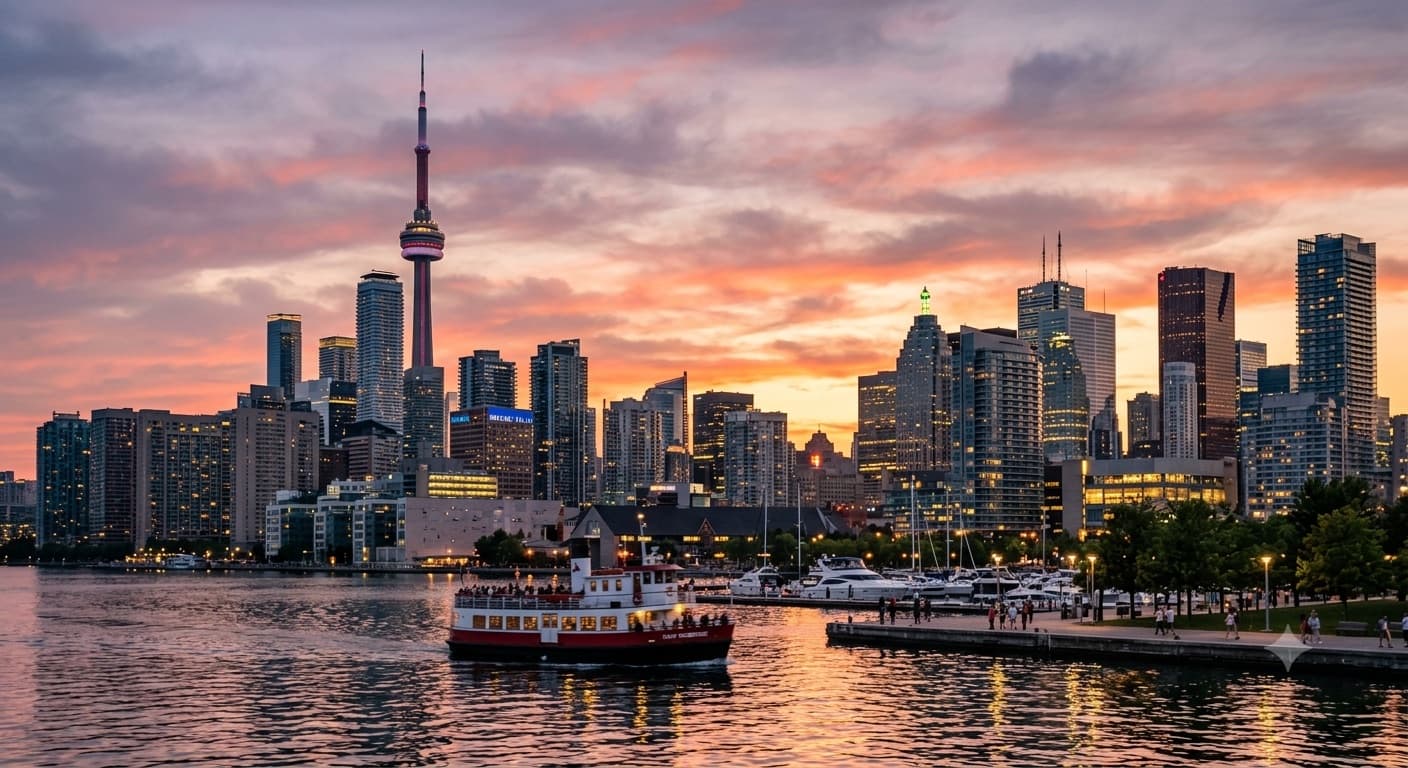
Toronto vs Vancouver real estate at a glance
| Metric | Toronto (GTA) | Metro Vancouver |
|---|---|---|
| Benchmark home price (June 2026) | $940,800 | $1,099,100 |
| Detached home | About $1.36M | About $1.99M |
| Condo apartment | About $631,000 | About $771,000 |
| 12 month price change | Down 5.4% | Down 6.0% |
| Average 1 bedroom rent | About $2,400/mo | About $2,600/mo |
| Average 2 bedroom rent | About $2,700/mo | About $3,150/mo |
| Residential property tax rate | 0.77% | About 0.31% |
| Land transfer tax on $1M | About $32,950 | About $18,000 |
| Adult monthly transit pass | $156 (TTC) | About $110 (1 zone) |
| Winter | Cold and snowy | Mild and rainy |
Price data: TRREB and Greater Vancouver Realtors MLS benchmark and average figures for June 2026. Rents, taxes, and transit fares are mid 2026 figures.
Is real estate more expensive in Toronto or Vancouver?
Vancouver is more expensive across every property type. The overall benchmark sits about $158,000 higher than Toronto’s, and the gap is widest for detached houses, where Vancouver runs roughly $600,000 more.
Home prices by property type, June 2026
TRREB and Greater Vancouver Realtors, June 2026. Benchmark and condo figures are MLS benchmarks; detached figures are typical sale prices.
Detached home prices
A detached house costs about $1.99 million in Metro Vancouver versus about $1.36 million in the GTA, a premium of roughly 45 percent.
Geography drives the gap. Vancouver is boxed in by mountains, ocean, and protected farmland, so detached supply barely grows. Toronto can still sprawl through Mississauga, Brampton, Markham, and Durham, which keeps a lid on detached pricing outside the core.
Condo and townhouse prices
Vancouver condos average about $771,000 versus about $631,000 in Toronto, but the gap is narrowing because Toronto condos have fallen 9.4 percent in the past year while Vancouver condos are down just 1.4 percent.
- Toronto is working through a record wave of new condo completions, which has flooded the resale and rental market with small investor owned units.
- Vancouver added far less new condo supply, so prices there have held firm through the downturn.
- Budgeting for a condo? Factor in monthly fees with our condo fee calculator.
How much income do you need to buy in each city?
You need a household income of roughly $210,000 to buy the benchmark home in Toronto and roughly $235,000 in Vancouver, assuming 20 percent down and today’s mortgage stress test.
- Toronto benchmark ($940,800): about $188,000 down, a $753,000 mortgage, and monthly carrying costs near $5,800 including property tax and heat.
- Vancouver benchmark ($1,099,100): about $220,000 down, an $879,000 mortgage, and monthly carrying costs near $6,300.
- Condos need far less: roughly $140,000 of income in Toronto and $165,000 in Vancouver at 20 percent down.
- A $60,000 salary does not buy in either city, but it can cover a room share or a studio outside the core while you save.
Enter your income and pick a property type to see where you stand in each city:
Qualifying at 6.50% (stress test)
Amortization
Property type
Toronto
Within reach$631,000
average condo, June 2026
- Down payment (20%)
- $126,200
- Mortgage needed
- $504,800
- Income needed
- ≈ $148,000/yr
- Your max price here
- $640,000
Vancouver
Short $18K/yr$771,000
average condo, June 2026
- Down payment (20%)
- $154,200
- Mortgage needed
- $616,800
- Income needed
- ≈ $168,000/yr
- Your max price here
- $685,000
Qualifies you at the greater of your rate plus 2% or 5.25% (the federal stress test), with a 32% gross debt service ratio and each city’s property tax rate. Lenders also weigh debts, credit, condo fees, and down payment source, so treat this as a starting point, not a pre approval.
Renting first and saving is a legitimate strategy in both cities. Run your own numbers with the Toronto rent vs own calculator or the Vancouver rent vs own calculator.
Which city is cheaper to rent in?
Toronto is cheaper to rent in, by about $200 a month for a one bedroom and about $450 a month for a two bedroom, and rents in both cities have been falling since 2025.
| Rental | Toronto | Vancouver |
|---|---|---|
| 1 bedroom (average) | About $2,400/mo | About $2,600/mo |
| 2 bedroom (average) | About $2,700/mo | About $3,150/mo |
| Direction of rents | Falling | Falling |
| Rent control | Ontario: capped increases, but units first occupied after Nov 2018 are exempt | BC: annual increase cap applies to nearly all tenancies |
- Toronto's condo completion wave has pushed thousands of investor units onto the rental market, giving tenants real negotiating power for the first time in years.
- Vancouver's vacancy rate remains tighter, so the discount from asking rents is smaller.
- BC's rent increase cap covers nearly all tenancies, while Ontario exempts newer buildings, a meaningful difference if you plan to rent long term in a new tower.
Not sure what rent fits your budget? Use the rent affordability calculator.
Property taxes and closing costs: where do buyers pay more?
Toronto costs far more at closing and every year after. A $1 million purchase triggers about $32,950 of land transfer tax in Toronto versus about $18,000 in Vancouver, and Toronto’s property tax rate is roughly two and a half times Vancouver’s.
Land transfer tax on a $1 million home
Toronto buyers pay about $32,950 because the city charges its own land transfer tax on top of Ontario’s. Vancouver buyers pay about $18,000 in BC Property Transfer Tax.
Buying at this price costs $14,950 more in land transfer tax in Toronto than in Vancouver.
Toronto combines Ontario’s land transfer tax with an equal municipal tax; Vancouver buyers pay BC’s Property Transfer Tax. First time buyer rebates (up to $8,475 combined in Toronto, and a partial exemption in BC) and luxury surcharges above $3 million are not shown.
Toronto is the only city in Canada with a municipal land transfer tax that mirrors the provincial one. First time buyers get partial rebates in both provinces, but the caps are low relative to big city prices. Estimate your full closing bill with the Toronto closing costs calculator or the BC closing costs calculator.
Annual property taxes
Vancouver has one of the lowest property tax rates in Canada at roughly 0.31 percent, while Toronto’s 2026 residential rate is 0.77 percent. On a $1 million assessment that is roughly $3,100 a year in Vancouver versus $7,700 in Toronto.
Toronto bills are based on MPAC assessed values that still reflect 2016 markets, so actual bills often run below the headline math, while Vancouver reassesses every year. Compare real bills with the Toronto property tax calculator and the Vancouver property tax calculator.
Extra taxes to know about
- Vancouver: Empty Homes Tax on vacant properties plus BC's speculation and vacancy tax, and an extra PTT bracket on homes over $3 million.
- Toronto: Vacant Home Tax, and a municipal land transfer tax surcharge on luxury purchases over $3 million.
- Both: the federal foreign buyer ban applies in each city, and both provinces layer an additional tax on foreign purchases where permitted.
First time buyer incentives: which city gives you more help?
Vancouver gives first time buyers the bigger break on a typical condo, since BC waives most of the transfer tax outright, while Toronto’s rebates cap out at $8,475 against a much larger tax bill. On new builds the advantage flips to Toronto, where combined HST relief can be worth far more.
The big federal programs apply identically in both cities, so stack them first:
- First Home Savings Account (FHSA): save $8,000 a year to a $40,000 lifetime cap per person, tax deductible in and tax free out.
- RRSP Home Buyers' Plan: withdraw up to $60,000 per person, repayable over 15 years.
- First Time Home Buyers' Tax Credit: a $10,000 credit worth up to $1,500 back.
- 30 year amortizations on insured mortgages, which lower the qualifying bar.
- Federal GST relief on qualifying new builds up to $1 million (partial to $1.5 million).
Where the cities differ:
| Incentive | Toronto | Vancouver |
|---|---|---|
| Transfer tax relief | Up to $8,475 (Ontario $4,000 + Toronto $4,475 rebates) | Up to about $8,000 (PTT exemption on homes to $835,000) |
| On the average condo | About $9,700 still owed after rebates ($631K purchase) | About $5,400 still owed after exemption ($771K purchase) |
| At $1 million | Rebates still apply: about $24,500 owed | Exemption lost above $860,000: full $18,000 owed |
| New build sales tax relief | Full 13% HST removed on new homes to $1M (temporary, to March 2027) | Federal 5% GST relief only, plus a PTT exemption on new homes to $1.1M |
Transfer tax figures use each province’s statutory brackets and 2026 rebate limits. Ontario’s enhanced HST rebate is temporary and open to all qualifying buyers, with details in the pre construction section below. Eligibility rules differ by program, so confirm before you budget.
For the full cash-to-close math, neighbourhood shortlist, and offer process, see the first time home buyer in Toronto and first time home buyer in Vancouver guides.
Pre construction condos: how do Toronto and Vancouver compare?
Both presale markets are effectively frozen in 2026, which hands rare leverage to buyers: Toronto assignments are selling below their original contract prices, and Vancouver developers are offering discounts of up to 25 percent plus incentives to move finished units.
| Factor | Toronto | Vancouver |
|---|---|---|
| New build price per sq ft | About $1,190 to $1,500 | About $1,100 to $1,550 |
| Presale market in 2026 | Deepest correction in 30+ years | Presales down about 60% from an already weak 2024 |
| Typical deposit | 15% to 20% over 18 to 24 months; 5% offers now common | 15% to 25% in 3 to 4 stages; 10% to 15% on slow launches |
| Buyer incentives | Price cuts, extended deposits, assignments below original price | Cuts up to 25%, cash back credits, rental guarantees |
| Completions pipeline | About 22,000 units in 2026, dropping to about 14,400 in 2027 | Record 2025 completions with strong supply into 2026 |
| Cooling off period | 10 days on new condos | 7 day rescission right on presales |
| Sales tax on new builds | 13% HST, fully rebated to $1M for agreements signed by March 2027 | 5% GST plus a PTT exemption on new homes to $1.1M |
RBC Economics, CMHC, and industry pricing surveys, mid 2026. Presale terms vary by project; deposit and incentive structures are set by each developer.
- The best deals are assignments and finished inventory: never lived in Toronto units are changing hands below their original contract price because earlier buyers cannot close.
- Know the risks: appraisal gaps at closing, developer delays or cancellations, and Toronto's interim occupancy fees before final closing.
- New builds still carry a large premium over resale in both cities, so compare any presale against a finished unit you can inspect and negotiate today.
Market forecast: where are Toronto and Vancouver prices heading?
Forecasters expect both markets to finish 2026 lower, with the GTA down about 4.5 percent year over year in Q4 and Greater Vancouver down about 3.5 percent, followed by a slow recovery with low single digit growth in 2027.
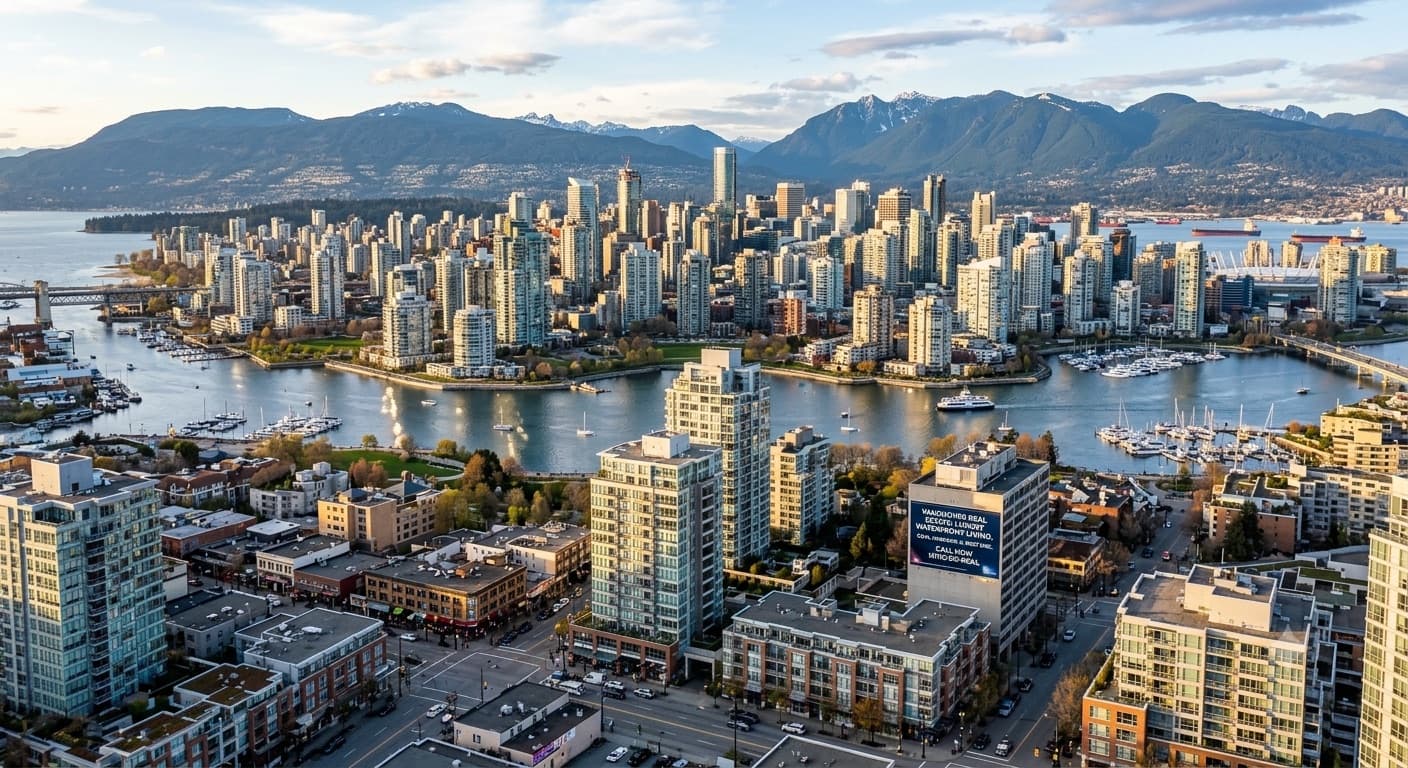
The rest of 2026
- Both cities are in balanced to buyer's market territory, with elevated inventory, longer days on market, and real negotiating room.
- Toronto's June 2026 sales jumped 9.4 percent year over year, an early sign that lower mortgage rates are pulling sidelined buyers back in, even as prices continue to drift down.
- Vancouver's benchmark is down 6.0 percent year over year, but TD Economics argues its foundation is firmer than Toronto's because it has far less unsold new supply to absorb.
- The condo divergence is the story to watch: Toronto condos are down 9.4 percent year over year against just 1.4 percent in Vancouver.
2027 and beyond
- CREA projects national average prices to rise about 2.3 percent in 2027, and both cities are expected to track that recovery from a lower base.
- Vancouver is positioned to recover first because supply is constrained and its condo market never cracked.
- Toronto's condo segment will likely lag into 2027 while the completion backlog clears, which keeps a window open for buyers targeting discounted units.
- Long term, both markets are underpinned by immigration driven demand and chronic supply shortages, which is why few forecasters expect prices to stay down for long.
Bottom line for timing: 2026 is the most buyer friendly market either city has seen in years, in both cities and especially for condos.
Should you buy now or wait?
If your financing is secure and you plan to stay five years or more, 2026 conditions favour buying: inventory is high, sellers are negotiating, and forecasters expect only a shallow recovery in 2027.
- Buy now if you find the right home: elevated listings mean you can include conditions, take your time on inspections, and negotiate on price, leverage buyers have not had in years.
- The window may not last: Toronto sales jumped 9.4 percent year over year in June 2026 as lower rates pulled sidelined buyers back in.
- Condo shoppers hold the most leverage, especially in Toronto, where prices are down 9.4 percent in a year and motivated sellers are common.
- Waiting makes sense if your down payment or job situation is not settled; nobody should stretch into a correction on shaky footing.
Transportation costs: Toronto vs Vancouver
Vancouver is cheaper for transit riders, with a one zone monthly pass around $110 versus $156 for the TTC, while drivers generally pay less in Toronto thanks to cheaper gas.
| Cost | Toronto | Vancouver |
|---|---|---|
| Adult monthly transit pass | $156 (TTC) | About $110 to $193 by zone (TransLink) |
| Single transit fare | About $3.35 | About $3.20 (1 zone) |
| Gas | Cheaper | Typically 20 to 30 cents more per litre |
| Car insurance | Private, GTA among Canada's priciest | ICBC public insurer, often cheaper for city drivers |
| Commute pattern | Longest average commutes in Canada | Shorter but geography funnels traffic onto bridges |
The bigger difference is how livable each city is without a car. Vancouver’s SkyTrain is automated, frequent, and expanding, while Toronto’s subway covers more of the city but is under heavy construction. Many Vancouver households drop to one car or none, which frees up hundreds of dollars a month for housing.
Food and restaurant costs
Food costs are close, but Vancouver runs about 10 to 14 percent higher for groceries while Toronto adds more tax at restaurants, since Ontario charges 13 percent HST on meals versus 5 percent GST on food in BC.
| Item | Toronto | Vancouver |
|---|---|---|
| Meal, inexpensive restaurant | $25.00 | $27.50 |
| Dinner for two, mid range | $120 | $120 |
| Fast food combo | $15.80 | $15.00 |
| Cappuccino | $5.60 | $6.00 |
| Draft beer (0.5L, restaurant) | $9.00 | $8.00 |
| Milk (1L) | $3.85 | $2.95 |
| Bread (500g loaf) | $4.00 | $3.85 |
| Eggs (dozen) | $4.90 | $5.90 |
| Chicken breasts (1kg) | $17.50 | $20.25 |
| Apples (1kg) | $5.40 | $5.90 |
Crowdsourced averages from Numbeo, July 2026. Restaurant prices are before tax and tip.
- Groceries for one: roughly $450 to $550 a month in Toronto and $500 to $600 in Vancouver.
- The tax gap matters: a $100 restaurant bill becomes $113 plus tip in Toronto and about $105 plus tip in Vancouver, which mostly offsets Vancouver's pricier menus.
- Both cities offer cheap eats strength: Toronto wins on sheer variety across its suburbs, Vancouver on sushi and Asian cuisine value.
Utilities and internet
Vancouver is cheaper for utilities. A typical apartment runs about $150 to $250 a month including electricity, internet, and phone, versus $250 to $400 in Toronto.
| Monthly cost (2 bedroom) | Toronto | Vancouver |
|---|---|---|
| Electricity rate | 9.8¢ to 20.3¢/kWh (time of use) | 11.0¢ to 15.3¢/kWh (two step) |
| Electricity bill | About $100 to $150 | About $70 to $100 |
| Heating | Real winter gas or electric bills | Modest, winters are mild |
| Air conditioning | Needed in humid summers | Rarely needed |
| Internet (unlimited) | About $70 to $120 | About $70 to $90 |
| Mobile plan | About $40 to $80 | About $40 to $80 |
| Typical all in with internet | $250 to $400 | $150 to $250 |
Mid 2026 rates from Toronto Hydro, BC Hydro, Enbridge, and FortisBC, with typical apartment bills from provincial cost of living surveys.
- BC Hydro's rates are among the lowest in North America, and Vancouver's mild climate means little air conditioning and lighter heating loads.
- Toronto's costs swing with the seasons: heating in winter, cooling in summer, and time of use electricity pricing that rewards off peak habits.
- Internet is closest to a wash, though Toronto's default big provider pricing runs higher before you negotiate.
What does a month actually cost in each city?
For most households the gap is a few hundred dollars a month in Toronto’s favour, driven almost entirely by housing. Pick the profile closest to yours to compare totals.
- Housing
- Transit
- Groceries
- Utilities & internet
- Dining out
Mid 2026 estimates using average rents, TTC and one zone TransLink passes, and typical grocery and utility spends. Owner housing includes mortgage (20% down, 4.5%, 25 years), property tax, and insurance on each city’s benchmark home.
Healthcare: is there a difference?
Healthcare is publicly funded and premium free in both cities, and the out of pocket extras that medicare does not cover, dental, eye care, physio, and fitness, cost about the same in both. The real differences are wait times for coverage and access to family doctors.
| Routine care, out of pocket | Toronto | Vancouver |
|---|---|---|
| Doctor and hospital visits | Covered by OHIP | Covered by MSP |
| Dental checkup + cleaning | About $250 to $350 | About $250 to $330 |
| Adult eye exam | About $120 to $250 | About $130 to $310 |
| Physiotherapy session | About $95 to $195 | About $90 to $150 |
| Gym membership (monthly) | About $60 to $85 | About $65 to $90 |
2026 ranges from provincial dental fee guides, optometry associations, and clinic pricing surveys. Employer benefits typically cover most dental, vision, and physio costs, and the Canadian Dental Care Plan helps lower income households in both provinces.
- New BC residents wait up to three months for MSP coverage, so budget for private insurance when relocating. Ontario removed its OHIP waiting period, so coverage can start immediately.
- Both cities face family doctor shortages; expect to rely on walk in clinics or nurse practitioner clinics at first.
- Both offer top tier hospital networks, with Toronto home to Canada's largest concentration of research hospitals.
Climate: rain versus snow
Vancouver has Canada’s mildest big city climate, with wet, grey winters that rarely dip below freezing. Toronto delivers true seasons: cold, snowy winters and hot, humid summers.
| Climate factor | Toronto | Vancouver |
|---|---|---|
| Winter temperatures | Often -10°C to 0°C | Usually 1°C to 7°C |
| Snow | Regular, sometimes heavy | Rare at sea level |
| Rain | Moderate year round | About 1,200mm, mostly Oct to Mar |
| Summer | Hot and humid, 26°C to 32°C | Mild and dry, 20°C to 25°C |
| Sunshine | More annual sunshine hours | Grey stretches in winter |
Average daily high (°C)
Average precipitation (mm)
Environment and Climate Change Canada climate normals, rounded. Vancouver’s rain concentrates from October to March; Toronto’s precipitation is spread evenly but arrives as snow in winter.
Climate also feeds into housing costs: Vancouver homes rarely need air conditioning, while Toronto owners budget for both heating and cooling. If dark, rainy winters affect your mood, weigh Vancouver’s November to March seriously before committing.
Lifestyle: jobs, salaries, and culture
Toronto wins on jobs and pay, with a deeper market and salaries typically 5 to 10 percent higher for comparable roles. Vancouver wins on outdoor lifestyle, with skiing, hiking, and beaches inside or minutes from the city.
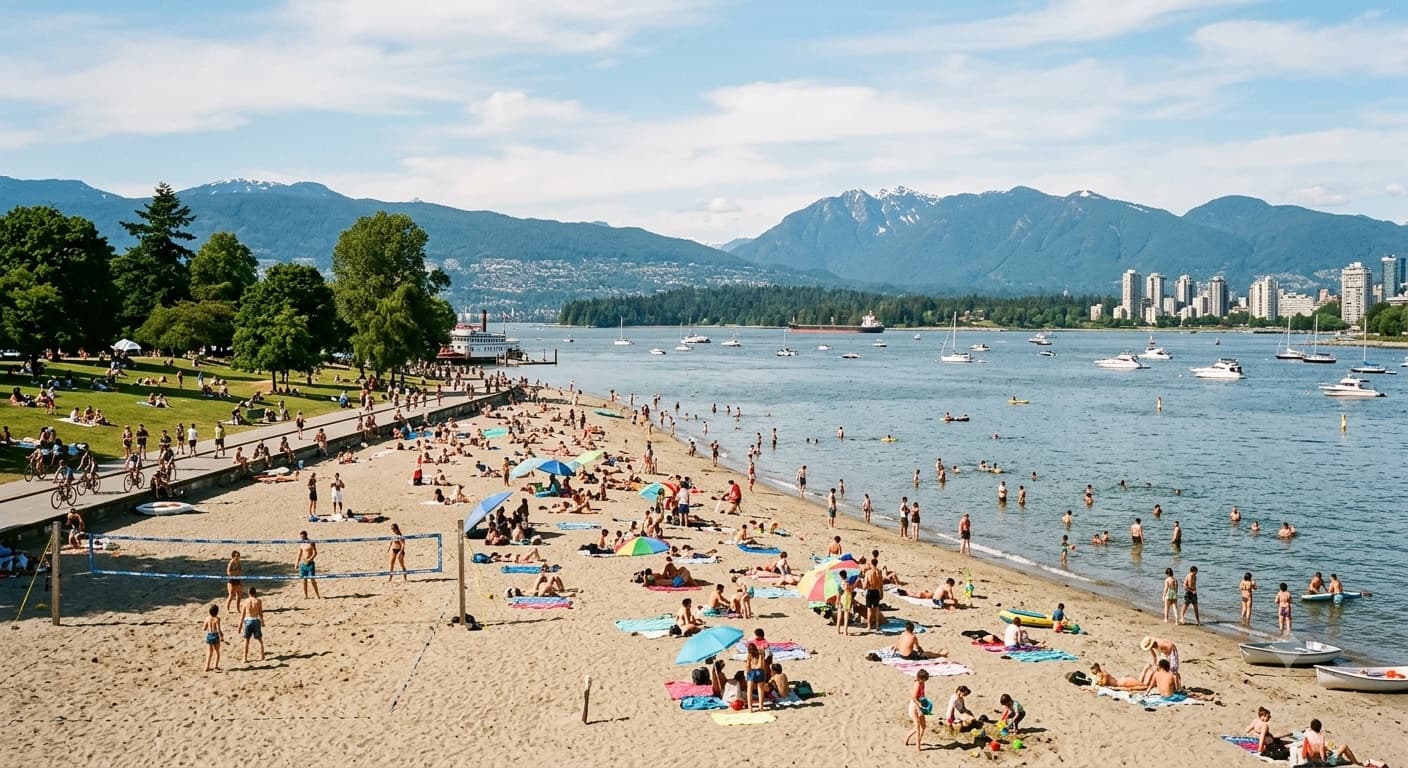
- Careers: Toronto is Canada's head office capital for finance, law, media, and tech. Vancouver's economy leans on film, gaming, resources, and a growing tech scene, but with fewer senior roles.
- Salary versus cost: because pay is higher and housing slightly cheaper, Toronto usually offers the better salary to cost of living ratio.
- Culture: Toronto has more of everything: teams, concerts, festivals, restaurants, and one of the most multicultural populations on earth.
- Pace: Vancouver runs slower and more outdoors oriented; the mountains are 30 minutes from downtown and the ocean is in the city.
Comparing neighbourhoods? Browse top rated agents and local guides on our Toronto and Vancouver city pages.
Best neighbourhoods to target in each city
In Toronto the strongest value-to-lifestyle picks sit just east and west of the core; in Vancouver the East Side and North Shore deliver the most livability per dollar.
Toronto neighbourhoods worth a look
- Leslieville: the east end's family magnet, with a brunch and boutique strip on Queen East and semis that still undercut comparable west end streets.
- The Junction: indie shops, breweries, and detached homes priced below the downtown premium, popular with buyers priced out of Roncesvalles.
- Liberty Village: the city's densest condo hub, a short walk to King West jobs and nightlife, and full of the discounted units driving the 2026 condo correction.
- Leaside: consistently top ranked schools, quiet tree lined streets, and steady demand from families upsizing out of condos.
- Willowdale (North York): two subway lines, newer builds, strong schools, and detached prices well below the central 416.
Vancouver neighbourhoods worth a look
- Mount Pleasant: the Main Street strip, breweries, and tech offices make it the city's young professional core, with townhomes and condos cheaper than downtown.
- Kitsilano: beach lifestyle, heritage character homes, and a mix of families and professionals, the classic west side entry point.
- Commercial Drive: East Side value with real character, a celebrated food scene, and quick SkyTrain access downtown.
- North Vancouver: trail and ski hill access out the front door, family oriented, and a scenic SeaBus commute to the core.
- West End: the renter's pick, walkable to beaches, Stanley Park, and downtown jobs without owning a car.
Toronto vs Vancouver real estate FAQ
Is it better to live in Toronto or Vancouver?
Toronto is better for careers and salaries, with a larger job market and slightly cheaper housing. Vancouver is better for climate and outdoor lifestyle, with mild winters and mountain and ocean access. Most people who prioritize income choose Toronto, and most who prioritize lifestyle choose Vancouver.
Is $60,000 enough to live in Vancouver?
A $60,000 salary covers a modest renting lifestyle in Vancouver, typically a studio, a shared apartment, or a one bedroom outside the core, but it is not enough to buy property. After tax you take home roughly $47,000, and average one bedroom rent near $2,600 a month would consume about two thirds of that.
How much do you have to make to afford a $1,000,000 house in Canada?
You need a household income of roughly $200,000 to $220,000 to afford a $1,000,000 home with 20 percent down, once the mortgage stress test, property taxes, and heating costs are factored in. A larger down payment lowers the income requirement.
What is the cheapest province to buy a house in Canada?
Saskatchewan and New Brunswick are the cheapest provinces to buy a house, with average prices around $350,000 or less, roughly a third of Toronto or Vancouver prices. Alberta offers the best big city value, with Calgary and Edmonton averaging far below Ontario and BC.
Is 2026 a good time to buy a home in Toronto or Vancouver?
2026 is the most buyer friendly market both cities have seen in years. Inventory is elevated, sellers are negotiating, and forecasters expect prices to bottom out before a modest recovery in 2027. Buyers with secure financing and a five year horizon have unusual leverage, especially condo buyers in Toronto.
The bottom line: which city wins?
Buy in Toronto if you want the lower entry price, the stronger job market, and the biggest selection of discounted condos. Buy in Vancouver if you want lower ongoing costs, a firmer market, and the lifestyle, and you can clear the higher price of admission.
- First time buyers: Toronto, where condo prices have corrected hardest and incomes stretch further.
- Families upsizing to a detached home: Toronto, unless a roughly $600,000 premium for Vancouver fits your budget.
- Buyers who may move again within a few years: lean Vancouver or keep renting, because Toronto's double land transfer tax makes short ownership stints expensive.
- Lifestyle movers: Vancouver, and the lower property taxes soften the higher purchase price over time.
Whichever market you choose, local expertise decides how well you buy. Neighbourhood level pricing in both cities varies more than the citywide averages suggest.
Comparing other markets? See our Calgary vs Toronto, Montreal vs Toronto, and Vancouver vs Calgary comparisons.
Keep comparing
Follow our guides as a preferred source in Google Search
- First time home buyer in TorontoDown payment, HST rebate, occupancy vs closing, and where to start
- Home inspection when buying a house in TorontoNo provincial licence, CAHPI limits, the $214.79 permit search, sewer camera
- Steps to buying a house in TorontoThe 12 steps in order: first-time tests, pre-approval, offer, close
- Pre construction vs resale condos in TorontoTarion’s $20,000 condo backstop, $52,676 to $80,690 DCs, occupancy
- Buying a home vs condo in TorontoCondo then house: market, lifestyle, location, first-time math, same tax rate
- First time home buyer in VancouverPTT after the $8,000 cap, the 92-day occupancy rule, and where to start
- First time home buyer in MontrealWelcome tax after closing, the closed city grant, and where to start
- First time home buyer in CalgaryNo land transfer tax, no city grant, and a house you can actually close
- Interactive city comparisonSwitch any two of eight markets. Prices, tax, rent, climate.
- Calgary vs TorontoWhy Alberta's no land transfer tax changes the maths
- Montreal vs TorontoWelcome tax, Quebec income tax, daycare, and language
- Vancouver vs CalgaryThe widest affordability gap between two Canadian cities
- Ottawa vs TorontoSame province, double LTT in Toronto, mill rate that almost cancels the cheaper house
- Halifax vs Toronto1.5% deed tax with no first-time rebate, and Kijiji rent is not the CMHC average
- Victoria vs TorontoNot a cheap alternative: Core houses, thirteen municipalities, 3.3% vs 0.3% vacancy
- Winnipeg vs TorontoRecord July prices, high mill rates, and $0 probate since 2020
Compare neighbourhoods
- The 25 Best Neighbourhoods in Toronto in 202625 areas with prices, Walk Scores, and boundary maps
- The 25 Best Neighbourhoods in Vancouver in 202625 areas, west side to east side, with boundary maps
- The 25 Best Neighbourhoods in Calgary in 202625 communities, inner city to lake suburbs
- The 25 Best Neighbourhoods in Montreal in 202625 areas, including how much French each one needs
- The 25 Best Neighbourhoods in Ottawa in 202625 areas, Greenbelt in or out, with boundary maps
- The 25 Best Neighbourhoods in Halifax in 202625 areas, peninsula to Dartmouth, with boundary maps
- The 25 Best Neighbourhoods in Victoria in 202625 areas across the municipalities, with boundary maps
- The 25 Best Neighbourhoods in Winnipeg in 202625 areas, walkable core to south-end new, with boundary maps