Relocation · Checked November 27, 2026 · 20 min read
Relocating to Vancouver: Real Costs, Neighbourhoods and BC Deadlines
Follow our guides as a preferred source in Google Search
Relocating to Vancouver is really a choice between two housing markets. Metro Vancouver's apartment benchmark is $686,200, while the detached benchmark is $1,799,400.
Your budget will pick the market, and the market narrows your map. For the full monthly picture, the cost of living in Vancouver goes line by line.
Relocating to Vancouver: quick answers
- Is Vancouver worth moving to?
- Yes if mild winters and the ocean and mountain setting justify high housing costs.
- What salary do you need?
- About $104,000 a year for one renter to keep an average one bedroom at 30% of gross pay.
- What does rent cost?
- About $2,600 a month for a one bedroom and $3,150 for a two bedroom.
- What does a home cost?
- Benchmark of $1,075,900 (Greater Vancouver Realtors, September 2026).
- Where should you live?
- West End and Yaletown are central, Mount Pleasant and Commercial Drive have frequent transit, and Marpole costs less.
- How cold is winter?
- January averages 4.1 °C across the day.
- What does the move cost?
- About $5,000 to $8,000 for a full-service two bedroom move from Toronto. Summer and month-end dates run higher, up to about $10,000.
- When does health coverage start?
- Apply as soon as you arrive. The wait is the rest of your arrival month plus two more months.
- How long do you have to switch your licence?
- Switch your licence within 90 days.
- When must you register your vehicle?
- Register, license and insure within 30 days. ICBC provides basic insurance.
How much money do you need to move to Vancouver?
A renter needs the first month, a half-month deposit, moving costs and somewhere to stay while searching. The planner below totals it for your origin.
Cash to land in Vancouver as a renter
- First month of rent
- $2,600
- Deposit
- $1,300
- Movers, 1 bedroom from Toronto
- $3,900
- Temporary stay, 7 nights
- $1,260
- Total
- $9,060
BC caps a security deposit at half a month of rent, with a further half month possible for a pet. The nightly rate is a starting assumption you should replace with a real booking.
Keep a cushion beyond that total. A delayed start date or a second month of searching is the cost newcomers most often leave out of a plan.
What salary do you need in Vancouver?
A single renter needs about $104,000 to hold an average $2,600 one bedroom at 30% of gross pay. Sharing or renting farther out lowers the bar.
Is $100,000 a good salary in Vancouver?
It is workable for one person: take-home is about $6,161 a month. Average one bedroom rent uses roughly 42% of it, which leaves less room than the headline suggests.
Where
Household
Where you live
Getting around
Enter income as
Manageable in Vancouver
You cover the budget and keep a small cushion, but a surprise bill would hurt. After tax you keep about $4,424 a month against a modelled budget of $3,958, which leaves $466.
Take-home pay
$4,424/mo
$11,835 income tax and $5,080 payroll deductions a year
Monthly budget
$3,958/mo
Rent, bills, food, transport, fun, family
Left over
$466/mo
Before saving, debt payments and travel
Where the money goes
- Rent$2,507
- Utilities, phone, internet$242
- Groceries$489
- Transit$117
- Eating and drinking out$291
- Gym and movies$108
- Clothing and shoes$44
- Dental, vision, prescriptions$60
- Household, subscriptions, personal care$100
Rent is 43% of gross income here, above the 30% guideline lenders and landlords use. To keep 15% of take-home after this budget in Vancouver you would need roughly $75,000 a year.
The same income and choices elsewhere
| Place | Take-home | Budget | Left over | Verdict |
|---|---|---|---|---|
| Vancouver | $4,424 | $3,958 | $466 | Manageable |
| Toronto | $4,378 | $3,746 | $632 | Manageable |
| Calgary | $4,394 | $3,312 | $1,082 | Comfortable |
How this works: take-home uses 2026 federal and provincial income tax plus CPP and EI (Quebec uses QPP and QPIP; the US figure adds Social Security, Medicare and a 4% state tax; Australia adds the Medicare levy). Couples and families are two equal earners.
Expenses use October 2026 Numbeo prices with our assumptions for clothing, health costs ($60 an adult), household items, and a car financed over five years at 6%. It ignores the Canada Child Benefit, GST credit, RRSP deductions and employer benefits, so real take-home may be higher.
- Housing
- Transit
- Groceries
- Utilities & internet
- Dining out
Mid 2026 estimates using average rents, each city’s adult transit pass, and typical grocery and utility spends. The owning profile uses a mortgage on the typical home at 20% down, 4.5%, 25 years, plus property tax and insurance.
Can you live in Vancouver on $45,000 or $4,000 a month?
Not comfortably alone at average rent. $45,000 gross is about $3,002 a month, and from $4,000 of monthly take-home an average $2,600 one bedroom takes 65%.
| Gross salary | Monthly take-home | Average 1 bed rent as a share | Left after rent |
|---|---|---|---|
| $45,000 | $3,002 | 87% | $402 |
| $70,000 | $4,424 | 59% | $1,824 |
| $100,000 | $6,161 | 42% | $3,561 |
| $150,000 | $8,816 | 29% | $6,216 |
One earner, 2026 federal and British Columbia tax and payroll deductions, with no other credits or benefits. Average one bedroom: $2,600.
Is Vancouver the best city to live in?
No city is best for everyone, and Vancouver's strengths are mild winters, ocean and mountain access and a low property tax rate. Its weakness is the price of entry.
| Pros | Cons |
|---|---|
| January averages above freezing | Long, wet autumn and winter |
| Residential tax rate near 0.31% | High purchase price sets a large down payment |
| Adult transit pass near $110 for one zone | Crossing zones or bridges can lengthen a commute |
| Annual rent increases are capped for sitting tenants | Asking rents on new leases are high |
Average daily temperature (°C)
Average monthly precipitation (mm)
Environment and Climate Change Canada 1991 to 2020 climate normals. Precipitation combines rain and the water equivalent of snow.
What are the disadvantages of living in Vancouver?
High purchase prices and rents come first, followed by long grey stretches, bridge and tunnel congestion and competition for rentals.
What is the coldest month in Vancouver?
December, with a daily average of 3.7 degrees. The warmest is August at 18.1 degrees.
Are people still moving to Vancouver?
The metropolitan area grew 0.2% between July 2024 and July 2025, a sharp slowdown driven by fewer non-permanent residents. It also lost a net 4,656 people to other provinces in Statistics Canada estimates.
What does it take to buy in Metro Vancouver?
Carrying the benchmark apartment takes about $150,000 of household income with 20% down. The detached benchmark takes far more.
| Property | Benchmark | Income to carry | Property transfer tax |
|---|---|---|---|
| Apartment | $686,200 | $150,000 | $11,724 |
| All homes | $1,075,900 | $233,000 | $19,518 |
| Detached | $1,799,400 | $387,000 | $33,988 |
Benchmarks: Greater Vancouver Realtors, September 2026, with detached and apartment from August 2026. Income assumes a 6.5% qualifying rate over 25 years and excludes strata fees. Transfer tax is before any exemption.
Qualifying at 6.50% (stress test)
Amortization
Property type
Vancouver
Your maximum price
$685,000
Average condo costs $686,200
Short by $1,200
Needs about $150,000 household income
Toronto
Your maximum price
$640,000
Average condo costs $631,000
Within reach, $9,000 of room
Needs about $148,000 household income
Estimates use a 32% gross debt service ratio, $125/month heating, and each city’s residential property tax rate. Qualifying uses the greater of your rate plus two points or 5.25%. Condo fees, CMHC insurance on down payments below 20%, and closing costs are not included.
How much property transfer tax will you owe in BC?
The tax is due on closing and can run into the tens of thousands at Metro Vancouver prices. Exemptions depend on your history and the home, not on the fact that you moved.
Use the BC property transfer tax calculator to price your purchase and confirm eligibility with your lawyer or notary before you write an offer.
Where are the jobs, and how will you reach them?
The port, film, technology and resource company head offices are major employers. Compare your offer with local rent, because pay does not always keep pace with housing.
SkyTrain makes living without a car realistic along its lines. Away from them, check bus frequency and any bridge or tunnel on your route.
Where should you live in Vancouver?
Pick the commute you can repeat every day, then filter by what you can pay. Neighbourhoods a few kilometres apart can differ by hundreds of dollars a month.
A couple planning a move with a dog asked r/askvan where to look before they knew the address of the clinic where one of them would work. A commenter suggested looking near work and pointed to Kitsilano and the city centre for dog outings. r/askvan apartment search discussion
When the work address is still up in the air, ask whether your employer offers temporary housing or help finding a place. At each viewing, confirm that the building will accept your dog and walk the route you’d take for a quick outing before work.
Filter Vancouver neighbourhoods by budget
25 of 25 neighbourhoods match, lowest price first.
| Neighbourhood | 1 bed rent | Walk Score |
|---|---|---|
| StrathconaVancouver's oldest residential streets, still resisting the tear-down | $2,000/mo | 92 |
| Kensington-Cedar CottageThe east side's most genuinely mixed neighbourhood | $2,000/mo | 83 |
| Hastings-SunriseThe east side's last relative bargain, with mountain views | $2,050/mo | 82 |
| MarpoleThe cheapest west side, if you can live with the airport flight path | $2,050/mo | 74 |
| Commercial DriveItalian cafés, activist bookshops, and the city's most eclectic strip | $2,150/mo | 94 |
| DunbarQuiet west side streets, big lots, and Pacific Spirit Park at the edge | $2,250/mo | 72 |
| Riley ParkMain Street's independent strip, wrapped around Queen Elizabeth Park | $2,250/mo | 91 |
| Arbutus RidgeQuiet west side family streets, with the Greenway running through | $2,250/mo | 70 |
| KerrisdaleVillage high street, mature trees, and strong school catchments | $2,300/mo | 80 |
| ShaughnessyEstate lots, heritage mansions, and Vancouver's oldest wealth | $2,300/mo | 55 |
| West EndBeach, seawall, and the best value on the downtown peninsula | $2,350/mo | 95 |
| OakridgeA mall redevelopment that is becoming a second downtown | $2,350/mo | 76 |
| Mount PleasantCraft breweries, tech offices, and Main Street's restaurant row | $2,400/mo | 95 |
| Point GreyOcean views, UBC proximity, and some of the priciest land in Canada | $2,400/mo | 68 |
| GastownCobblestones, heritage brick, and a design and restaurant scene | $2,400/mo | 98 |
| West VancouverOcean-view hillsides, Ambleside beach, and North Shore mountains | $2,400/mo | 58 |
| Lower LonsdaleNorth Shore waterfront with a SeaBus to downtown | $2,400/mo | 91 |
| South GranvilleGalleries, design showrooms, and pre-war apartment blocks | $2,450/mo | 92 |
| Cambie VillageA Canada Line corridor that turned into one of the city's best streets | $2,450/mo | 88 |
| Downtown VancouverEverything within fifteen minutes on foot | $2,500/mo | 99 |
| FairviewWest side density done right, between Granville Island and Cambie | $2,500/mo | 96 |
| KitsilanoBeach volleyball, yoga studios, and character homes on West 4th | $2,550/mo | 90 |
| YaletownWarehouse lofts, seawall access, and the city's most polished streets | $2,650/mo | 97 |
| Olympic VillageA purpose-built waterfront district that finally grew into itself | $2,700/mo | 94 |
| Coal HarbourGlass towers, marina views, and Stanley Park at the end of the seawall | $2,800/mo | 96 |
Directional 2026 estimates anchored to board benchmarks, not appraisals or listings. Walk Scores are approximate.
- West End and Yaletown: apartment living close to downtown, with very high walkability.
- Mount Pleasant and Commercial Drive: shopping streets, older buildings and frequent transit.
- Marpole and Kensington-Cedar Cottage: lower estimated rents farther from the core.
What is the most affordable area to live in Vancouver?
Of the 25 neighbourhoods profiled on this site, Strathcona has the lowest estimated one bedroom rent at about $2,000. The lowest estimated house price is in Strathcona, near $1,600,000.
What is the nicest or most expensive part of Vancouver?
"Nicest" depends on what you need day to day, but price is measurable. Shaughnessy has the highest estimated house price here at about $5,600,000, and Coal Harbour has the highest estimated one bedroom rent at $2,800.
These are site estimates for the profiled areas only, so check current listings before you narrow a search.
Which Vancouver trade-offs matter on the ground?
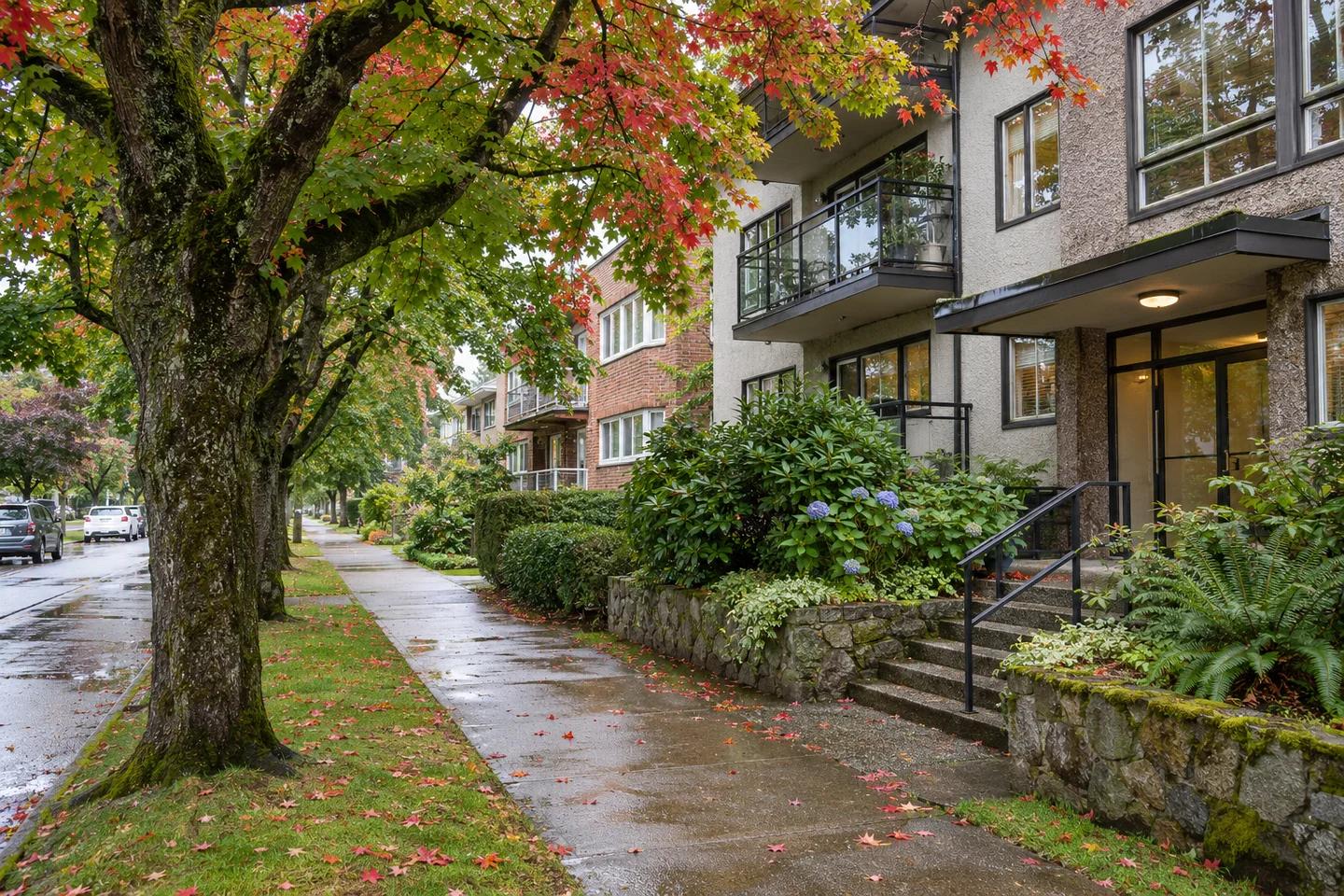
Two areas with similar rents can differ sharply in noise, hills, transit frequency and building age. Those details decide whether you stay past the first lease.
Compare the downsides of each of the best neighbourhoods in Vancouver before you commit to one from another city.
Is Vancouver safe compared with other cities?
Vancouver's 2025 Crime Severity Index was 83.5, above the national figure of 75.0. It rose 1% from 2024.
| Metropolitan area | Crime Severity Index, 2025 | Change from 2024 |
|---|---|---|
| Vancouver | 83.5 | +1% |
| Toronto | 55.0 | -7% |
| Ottawa (Ontario part) | 50.6 | -6% |
| Montreal | 61.3 | -5% |
| Calgary | 61.7 | -3% |
| Halifax | 68.6 | -6% |
| Victoria | 74.6 | +5% |
| Edmonton | 95.6 | -7% |
| Winnipeg | 113.4 | -9% |
| Canada | 75.0 | -5% |
Source: Statistics Canada, police-reported crime by metropolitan area. A higher index means more severe police-reported crime, and reporting practices differ between police services.
How do you check a specific Vancouver address?
The Vancouver Police GeoDASH crime map shows reported incidents by area. Municipalities such as Burnaby and Surrey are policed separately.
A metropolitan figure cannot describe one street, so look at recent reports near the address and visit at two times of day.
What is daily life like in Vancouver?
Water and mountains shape the week, with beaches and seawall paths in town and ski hills across the inlet.
| Looking for | Where people look |
|---|---|
| Outdoors | Stanley Park, the Seawall, Kitsilano Beach and the North Shore mountains |
| Universities and colleges | UBC, Simon Fraser University, BCIT and Emily Carr University |
| Nightlife | Gastown, Granville Street, Main Street and Commercial Drive |
| Nearby cities | Burnaby, Richmond, New Westminster, North Vancouver and Surrey |
| Day trips | Whistler by road, Vancouver Island by ferry and Seattle across the border |
Why is Vancouver called "No Fun City"?
The nickname is usually tied to complaints about liquor licensing, noise bylaws, venue costs and early closing. Many residents and city officials dispute it, so judge the nightlife near your own shortlist.
How much do movers charge to get to Vancouver?
A cross-country two bedroom from Toronto is a long-haul move of roughly $5,000 to $8,000. A move from Calgary costs considerably less.
- From Toronto (about 4,400 km)$5,000 to $8,000
- From Calgary (about 970 km)$2,500 to $4,200
- From Edmonton (about 1,160 km)$2,750 to $4,500
- From Winnipeg (about 2,300 km)$3,800 to $5,950
Planning ranges scaled from published long-distance quotes for a full-service move, before tax. Distances are approximate and a written quote is the only real price.
Add elevator booking fees and parking permits for apartment moves.
What does the local leg of a Vancouver move cost?
Elevator bookings, narrow lanes and loading restrictions can add crew hours after the long haul arrives. Budget the final delivery separately if your goods pass through storage.
The Vancouver moving cost calculator estimates hourly crew rates and truck rental so you can check what a quote includes.
Can you move to Vancouver from outside Canada?
Yes, with immigration status that allows it. Visiting Canada does not by itself let you work or live here.
Can Americans move to Canada?
U.S. citizens can enter as visitors with a valid passport, but working generally requires authorization first.
Compare the federal immigration programs for permanent routes, which include Express Entry, provincial nomination and family sponsorship.
Can you move to Canada without a job?
Some permanent routes do not require a job offer, while most work permits depend on one. Requirements, fees and any proof of funds are set by Immigration, Refugees and Citizenship Canada, so confirm them there.
What is the 90% rule for newcomers?
It is a tax rule: in your arrival year, you can claim certain federal non-refundable tax credits in full if Canadian-source income was at least 90% of your world income for the part of the year before you became a resident. Otherwise some credits are limited or prorated, so ask a tax professional.
This is general information, not immigration or tax advice. The provincial rules in this article are written mainly for moves within Canada, so check which apply to your status.
How do British Columbia rules compare with every other province?
The table puts British Columbia first, followed by the other nine provinces, across health, driving, renting and legal ages. Choose where you live now to move that province next to British Columbia.
Scroll sideways to see all ten provinces. British Columbia stays first.
| Rule | British ColumbiaMoving to | Alberta | Saskatchewan | Manitoba | Ontario | Quebec | New Brunswick | Nova Scotia | Prince Edward Island | Newfoundland and Labrador |
|---|---|---|---|---|---|---|---|---|---|---|
| Health | ||||||||||
| When health coverage starts | Rest of arrival month plus 2 monthsSource | First day of the third monthSource | May begin the first day of the third monthSource | First day of the third month; military families exemptSource | No waiting periodSource | Up to 3 monthsSource | First day of the third month after the month you settleSource | Usually the first day of the third monthSource | First day of the third monthSource | Rest of arrival month plus 2 monthsSource |
| How you apply | Apply on arrival; adults get a Photo BC Services CardSource | Within 3 months, with ID, status and residency proofSource | Register for a health cardSource | Apply within 3 monthsSource | In person at ServiceOntario with 3 documentsSource | Register with RAMQSource | Online, by mail or at Service New BrunswickSource | Registration for Health Services form; no feeSource | Access PEI, with your old health card or birth certificateSource | Apply to MCP on arrival; no feeSource |
| Prescription drugs | Income-based Fair PharmaCareSource | Optional Non-Group Coverage; apply within 4 monthsSource | Not confirmed. Check with the province. | Pharmacare, with an income-based deductibleSource | Ontario Drug Benefit for 65+ and certain groups | Coverage mandatory, private or publicSource | NB Drug Plan if you lack other coverageSource | Family Pharmacare; separate seniors planSource | Generic and Catastrophic drug programsSource | Separate Prescription Drug Program; MCP excludes drugsSource |
| Ambulance bills | $80 for MSP membersSource | $385 with transport, $250 assessment onlySource | $245 to $325 plus $2.30 per kmSource | Billed to the patientSource | $45; $240 if not medically essentialSource | $125 plus $1.75 per km; often free at 65+Source | $130.60 with Medicare, $650 withoutSource | You may pay all or partSource | Billed; the rate depends on having a PEI cardSource | $115 with MCP, $650 withoutSource |
| Finding a family doctor | Health Connect Registry, or 811Source | Alberta Find a Provider, or 811Source | Not confirmed. Check with the province. | Family Doctor Finder, 1-866-690-8260Source | Health Care ConnectSource | Quebec Family Doctor FinderSource | Not confirmed. Check with the province. | Need a Family Practice Registry, or 811Source | Patient Registry, 1-855-563-2101Source | Patient Connect NL, 1-833-913-4679Source |
| Driving | ||||||||||
| Driver's licence | Within 90 daysSource | Within 90 daysSource | Within 90 daysSource | Within 3 monthsSource | Within 60 daysSource | Within 6 monthsSource | As soon as you establish residenceSource | 180 days (some older pages say 90)Source | Within 4 monthsSource | Within 3 monthsSource |
| Vehicle registration | Within 30 daysSource | Within 90 daysSource | Within 90 daysSource | Within 3 monthsSource | Within 30 daysSource | Within 90 daysSource | ImmediatelySource | Official pages differ, from 30 days; confirm earlySource | Not confirmed. Check with the province. | Within 90 daysSource |
| Vehicle inspection | Usually required; some Prairie exemptionsSource | May be required; ask a registry agentSource | Most vehicles need one before registrationSource | Required; valid BC, AB, SK, ON and QC certificates acceptedSource | Safety standards certificate requiredSource | Required for most used vehiclesSource | Within 14 days of registering; NS and PEI inspections acceptedSource | Within 10 days after registering a used vehicleSource | Annual; passenger inspections from NS and NB accepted until they expire or after a yearSource | Not confirmed. Check with the province. |
| Auto insurance | Public basic insurance (ICBC)Source | Private insurersSource | Basic SGI insurance requiredSource | Public Autopac (MPI)Source | Compulsory, private insurersSource | Public injury plan plus private liability of $50,000 or moreSource | Compulsory liability insuranceSource | Arrange before registeringSource | Proof of insurance requiredSource | Proof of insurance requiredSource |
| Winter tires | Required on signed highways, Oct 1 to Apr 30 (some end Mar 31)Source | No province-wide mandateSource | No province-wide mandateSource | No province-wide mandateSource | No province-wide mandateSource | Mandatory Dec 1 to Mar 15Source | No province-wide mandateSource | No province-wide mandateSource | No province-wide mandateSource | No province-wide mandateSource |
| Renting | ||||||||||
| Rental deposit | Half a month, plus half for petsSource | Up to one month, held in trustSource | Up to one month; half due at the startSource | Up to half a month | Last month's rent onlySource | No deposit beyond first month's rentSource | Up to one month, held by a government officeSource | Up to half a month, held in trustSource | Up to one monthSource | Up to three quarters of a monthSource |
| Rent increases | 2.2% maximum in 2027Source | No cap; once every 12 monthsSource | No cap; 12 months' notice (6 for association members)Source | 3.0% guideline in 2027, with exemptionsSource | 1.9% guideline in 2027; newer units exemptSource | No fixed cap; tribunal can set rentSource | 3% cap through 2027Source | 5% cap through 2027Source | 2% maximum in 2026; check 2027Source | No cap; 6 months' notice, once every 12 monthsSource |
| Other | ||||||||||
| Drinking and legal ages | 19Source | 18Source | 19Source | 18Source | 19Source | 18 for alcohol, 21 for cannabisSource | 19Source | 19Source | 19Source | 19Source |
Rules reviewed November 27, 2026 for moves between provinces; the territories are not included. Newcomers from outside Canada, students and temporary workers can face different rules, so confirm yours with the linked source.
Could Victoria suit you better under the same BC rules?
Health, driving and tenancy rules carry across the province, so the choice is about housing supply and access to the mainland. Rental availability differs a great deal.
See what relocating to Victoria, BC involves, including condo vacancy, ferry logistics and benchmark prices.
How do you move your mail and update your address?
Forward your mail before you leave, then update each government office separately. Changing it in one place does not change it everywhere.
| Who to tell | When | What to know |
|---|---|---|
| Canada Post | Before moving | Price depends on distance and term. Forwarding covers mail, not your records. |
| Canada Revenue Agency | Immediately | Benefit payments can stop if your address is out of date, even with direct deposit. |
| Service Canada | First month | OAS can be updated online. CPP needs a call or visit. |
| Elections Canada | First month | Check that your registration shows the new address. |
| Provincial health and licensing offices | On arrival | These are separate applications, not address changes. |
| Banks, insurers, employer, investments | First month | Payroll needs your new province to deduct the right tax. |
Keep a folder with passports or birth certificates, your old licence, health cards, immunization records, a lease or purchase agreement and a utility bill. Provincial offices ask for proof of identity, status and your new address.
How does healthcare work when you move to British Columbia?
The rest of your arrival month plus two months.
Keep your old health card and any private coverage until the new plan is confirmed.
How to get your health card
Apply for MSP on arrival. Adults then get a Photo BC Services Card at a driver licensing office.
Read the official page on how you apply.
Each family member needs to be registered, including children.
Prescription drugs
Register for income-based Fair PharmaCare when you enrol in MSP.
Read the official page on prescription drugs.
Ambulance costs
$80 for MSP beneficiaries. The subsidy does not apply to everyone, so keep other coverage during the wait.
Read the official page on ambulance bills.
Finding a family doctor
Join the Health Connect Registry online or at 811 once you have a Personal Health Number.
Read the official page on finding a family doctor.
Ask your current doctor for enough refills to cover the search and for a copy of your records.
What do drivers have to do after moving to British Columbia?
Get insurance, register and inspect the vehicle, and exchange your licence. The deadlines differ, so work from the shortest one.
Your British Columbia arrival deadlines
- Provincial health coverageStarts October 1, 2027
Apply as soon as you arrive. The wait is the rest of your arrival month plus two more months.
Official rule - Driver's licenceBy September 29, 2027
Switch your licence within 90 days.
Official rule - Vehicle registrationBy July 31, 2027
Register, license and insure within 30 days. ICBC provides basic insurance.
Official rule
For moves from another Canadian province, counted from your arrival date. Your residency date can differ, so confirm it with the office handling your file.
Driver's licence
Switch within 90 days.
Read the official page on driver's licence.
Registration and inspection
Register, license and insure within 30 days.
Read the official page on vehicle registration.
Usually a passed inspection at a BC facility. Some private vehicles from Alberta, Saskatchewan and Manitoba are exempt.
Read the official page on vehicle inspection.
Insurance
Basic insurance comes from ICBC. Bring your driving and claims history.
Read the official page on auto insurance.
Do not cancel the old policy until the new one is active.
Winter tires
Required on signed highways from October 1 to April 30, or March 31 on some routes. Tires need 3.5 mm tread.
Read the official page on winter tires.
- Bring your current licence, vehicle permit, bill of sale, lien or lease details and a driving abstract.
- Check open recalls and repair obvious defects before an inspection.
- Ask your old province what to do with plates and whether any fee or premium is refundable.
What housing rules apply in British Columbia?
Up to half a month's rent, plus half a month if you have a pet.
Rent increase rules are separate, and they may differ sharply from what you are used to.
Deposits
Up to half a month's rent, plus half a month if you have a pet.
Read the official page on rental deposit.
Rent increases
2.2% maximum for 2027.
Leaving your current home
Notice is governed by the province and lease you are leaving, not the one you are moving to. Give it in writing, keep proof and ask about assignment or subletting if your dates do not line up.
- Never send a deposit before someone you trust has seen the unit and you have checked who owns or manages it.
- Buying remotely? Make inspection, financing and document review conditions part of your plan with your lawyer or notary.
- Selling and buying across provinces means two sets of closing costs and two legal processes.
How is a rent increase limited in Vancouver?
BC caps the yearly increase for a continuing tenancy, which protects you after you move in but not when you first negotiate. The starting rent therefore matters most.
Model future payments with the British Columbia rent increase calculator and compare them against your expected pay.
In what order do you buy a home in Vancouver?
Strata documents, financing and inspection conditions all compete for a short window. Buyers arriving from another province should learn the sequence before the first offer. Knowing it early also helps you time notice on your current home.
The steps to buying a house in Vancouver walk from pre-approval to possession, including when to read strata minutes.
How does moving affect taxes, benefits and work?
You generally pay provincial income tax for the whole year to the province where you live on December 31. That applies even if you arrive late in the year.
Can you deduct moving expenses?
You may, if your new home is at least 40 km closer to a new job, business or full-time post-secondary program. Read the CRA moving expense rules and keep every receipt.
Amounts your employer reimburses and does not tax cannot be claimed again.
Benefits and credits
Provincial benefits and credits change with your province. Update the Canada Revenue Agency promptly and compare your next payment notice with the old one.
Licensed jobs and trades
Certified workers can generally be recognized in another province under Canadian labour mobility rules, but you usually have to apply to the new regulator first. Fees, insurance, background checks or a local law exam can apply.
Pay and payroll
Ask whether your salary changes with location and confirm your employer can employ you in the new province. Check the first pay stub for the correct provincial deductions.
What should families arrange before moving to Vancouver?
Start child care and school contact before you choose the final address if you can. Spaces and catchments can decide which homes are practical.
- Children can start kindergarten in September of the year they turn five. Registration usually opens in January or February, and districts ask for birth, immunization and address records.
- Child care providers keep their own waiting lists and may not charge a waitlist fee if they receive base funding.
- Transfer special education plans, medical action plans and custody documents. Ask the new school what it needs before the first day.
What do you need to set up in Vancouver?
Utilities first, then the municipal rules for pets, parking and property. These are set locally and often surprise new arrivals.
Utilities and building access
- Open electricity and gas accounts before possession. In rentals, ask which utilities are included.
- Strata buildings often require move-in booking, a fee and an elevator reservation.
Pets, parking and property rules
- Dogs over three months need a Vancouver dog licence, $68 a year per dog.
- A residential parking permit needs your ICBC insurance address in the zone and two pieces of address proof. It does not move with you.
- Owners file the Empty Homes Tax declaration. The declaration for 2026 is due February 2, 2027, and the rate on empty homes is 3% of assessed value.
What do people forget when moving to Vancouver?
The expensive surprises are usually local rules and timing gaps. Check these before you commit to a date or a home.
- Owners in taxable areas also declare the provincial speculation and vacancy tax by March 31 each year. Miss it and you are billed at the maximum rate until you declare.
- Pet rules vary by building. A strata bylaw or lease can restrict an animal the city would license.
- Your parking permit depends on your car insurance address, so sort ICBC first.
| Often forgotten | Why it matters |
|---|---|
| Overlap between homes | Two rents, or rent and a mortgage, can run in the same month |
| Open medical referrals | A specialist referral may not carry over, so ask before you leave |
| Wills and powers of attorney | Family and estate law differ by province |
| Moving coverage | Basic liability may pay far less than replacement value |
| Warranties and memberships | Some end or cost money to cancel when you move |
| Two-step verification | Changing your phone number can lock you out of banking and government accounts |
| Delivery delays | Pack medication, documents and a few days of essentials yourself |
Vancouver moving checklist: what to do and when
Work down the timeline and switch off anything that does not apply. Provincial deadlines are included where they could be confirmed.
Your moving checklist
Switch off anything that does not apply. Ticks are saved in this browser only.
Download PDF checklistThe printable version includes every item, for use offline.
What if Vancouver is not your only option?
Comparing destinations side by side is easier before you commit to a lease, a start date or a mover. Rent, salary needs, winter and provincial deadlines can differ widely.
If your plans are still open, the overview of moving across Canada lines up nine cities and all ten provinces. Use it to test Vancouver against a second choice, then return to this checklist once the destination is settled.
How do you pick an agent before you arrive?
Remote buyers depend heavily on an agent's judgment about buildings and blocks. Ask who attends viewings, how documents are reviewed and which areas they work most.
Use these points on choosing a real estate agent in Vancouver to compare candidates by evidence instead of advertising.
Which Vancouver agents handle searches from far away?
Strata buildings and fast rentals are hard to judge from another city, so evidence of remote work counts. Past clients describe video showings, employer relocations and purchases made before they arrived.
See the best Vancouver real estate agents for relocation, ordered by how many relocation accounts appeared in the Google reviews we sampled.
The bottom line
Vancouver can work for movers who accept an apartment or a longer commute in return for the climate and setting. Test your salary against rent first, then shop.
This page is general information, not legal, tax or financial advice. Confirm rules and prices with the linked source or a licensed professional before you act.