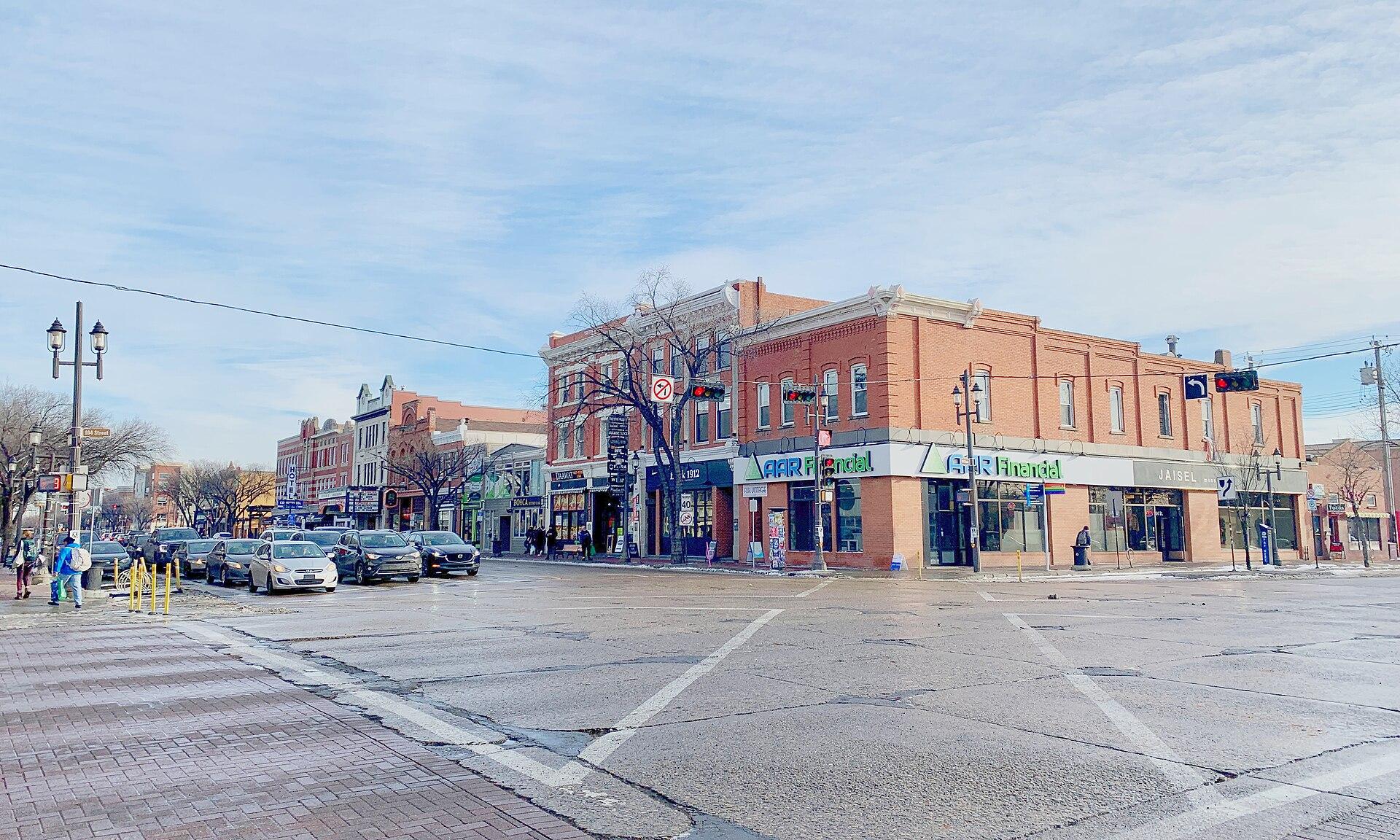
Relocation · Checked November 27, 2026 · 20 min read
Relocating to Edmonton: Prices, Pay, Winter and Your First 90 Days
Follow our guides as a preferred source in Google Search
Relocating to Edmonton puts an average apartment within reach at $213,245. That figure rose 5.1% in the year to October 2026 while the all-home benchmark slipped, so the cheapest segment is not standing still.
Low entry prices are the draw, and the right home type and location decide whether they hold up. The line-by-line Edmonton cost of living is the companion to this plan.
Relocating to Edmonton: quick answers
- Is Edmonton worth moving to?
- Yes if low home prices matter most and a long winter does not put you off.
- What salary do you need?
- About $52,800 a year for one renter to keep an average one bedroom at 30% of gross pay.
- What does rent cost?
- About $1,320 a month for a one bedroom.
- What does a home cost?
- Greater Edmonton benchmark of $417,200 in October 2026, with apartments averaging $213,245.
- Where should you live?
- Downtown and Wîhkwêntôwin suit apartment living, Old Strathcona and Garneau sit near the university, and southwest communities offer newer homes.
- How cold is winter?
- January averages a high of -5.8 °C and a low of -14.7 °C.
- What does the move cost?
- About $4,550 to $7,050 for a full-service two bedroom move from Toronto. Summer and month-end dates run higher, up to about $8,800.
- When does health coverage start?
- Apply within 3 months. Coverage starts on the first day of the third month after you establish residency.
- How long do you have to switch your licence?
- Exchange within 90 days.
- When must you register your vehicle?
- Register in Alberta within 90 days. Insurance is sold by private companies.
What does housing cost in Edmonton?
The Greater Edmonton Area average was $457,641 in October 2026, with detached homes averaging $550,510. A one bedroom rents for about $1,320.
| Property | Price | Household income to carry it |
|---|---|---|
| Apartment condo (average) | $213,245 | $55,000 |
| All homes (benchmark) | $417,200 | $103,000 |
| Detached (average) | $550,510 | $134,000 |
Prices: REALTORS Association of Edmonton, October 2026, Greater Edmonton Area. Income assumes 20% down, a 6.5% qualifying rate, 25 years, a 1.04% property tax rate and a 32% gross debt service limit, before condo fees.
An apartment's low price can hide a high monthly fee. Ask for the fee, the reserve fund study and any planned special assessment before you compare it with a townhouse.
Alberta has no land transfer tax, only title and mortgage registration fees.
Is Edmonton a growing city?
Yes, quickly. The metropolitan area grew 3.0% between July 2024 and July 2025, the highest rate among Canadian metropolitan areas, with a net gain of 11,742 people from other provinces in Statistics Canada estimates.
What fees replace a land transfer tax in Edmonton?
Alberta charges title and mortgage registration fees, which are modest but still part of your closing cash. Legal fees and property tax adjustments sit on top.
See the registration charges for your purchase in the Alberta land transfer calculator before finalizing your down payment.
Is it cheaper to live in Edmonton?
Yes against Calgary on this basket: one person spends about $2,960 a month in Edmonton and $3,105 in Calgary. Rent is the largest difference.
- Rent
- Groceries
- Utilities and phone
- Transit
- Dining
- Leisure
Edmonton: $2,960 a month · Calgary: $3,105 a month · Vancouver: $3,754 a month · Toronto: $3,538 a month
Numbeo user-reported prices, October 2026, in CAD. Excludes a car, childcare, debt and savings.
Is it cheaper to live in Alberta or BC?
Edmonton and Calgary both come in below Vancouver on the budget above. Smaller BC and Alberta towns need their own comparison.
A single renter needs about $52,800 to keep average rent at 30% of gross pay. At $70,000 your take-home is roughly $4,394 a month.
Where
Household
Where you live
Getting around
Enter income as
Comfortable in Edmonton
You can cover the budget and still put aside 15% or more of take-home pay. After tax you keep about $4,394 a month against a modelled budget of $3,163, which leaves $1,231.
Take-home pay
$4,394/mo
$12,197 income tax and $5,080 payroll deductions a year
Monthly budget
$3,163/mo
Rent, bills, food, transport, fun, family
Left over
$1,231/mo
Before saving, debt payments and travel
Where the money goes
- Rent$1,539
- Utilities, phone, internet$462
- Groceries$429
- Transit$102
- Eating and drinking out$314
- Gym and movies$114
- Clothing and shoes$43
- Dental, vision, prescriptions$60
- Household, subscriptions, personal care$100
Rent is 26% of gross income here, within the 30% guideline. To keep 15% of take-home after this budget in Edmonton you would need roughly $58,000 a year.
The same income and choices elsewhere
| Place | Take-home | Budget | Left over | Verdict |
|---|---|---|---|---|
| Edmonton | $4,394 | $3,163 | $1,231 | Comfortable |
| Calgary | $4,394 | $3,312 | $1,082 | Comfortable |
| Toronto | $4,378 | $3,746 | $632 | Manageable |
How this works: take-home uses 2026 federal and provincial income tax plus CPP and EI (Quebec uses QPP and QPIP; the US figure adds Social Security, Medicare and a 4% state tax; Australia adds the Medicare levy). Couples and families are two equal earners.
Expenses use October 2026 Numbeo prices with our assumptions for clothing, health costs ($60 an adult), household items, and a car financed over five years at 6%. It ignores the Canada Child Benefit, GST credit, RRSP deductions and employer benefits, so real take-home may be higher.
The salary calculator uses October 2026 prices and a June 2026 home price, so its ownership figures differ from the October market table.
Is $50,000 a good salary in Edmonton?
It can cover a single renter on a careful budget. Take-home is about $3,295 a month, and a $1,320 one bedroom uses about 40% of it.
| Gross salary | Monthly take-home | Average 1 bed rent as a share | Left after rent |
|---|---|---|---|
| $50,000 | $3,295 | 40% | $1,975 |
| $70,000 | $4,394 | 30% | $3,074 |
| $100,000 | $6,074 | 22% | $4,754 |
One earner, 2026 federal and Alberta tax and payroll deductions, with no other credits or benefits. Average one bedroom: $1,320.
What drives the job market in Edmonton?
Government, the University of Alberta, health care and energy services are the main anchors. That mix leans more on the public sector than Calgary does.
Transit combines LRT lines and buses. Map your route to work from the exact address, particularly if it is south or west of the central lines.
Is Edmonton a good place to live?
It is a strong fit if you want lower home prices, a large river valley park system and a steady public-sector job base. It is weaker if long winters or car dependence in outer areas would wear on you.
What are the pros and cons of moving to Alberta?
The pros are no provincial sales tax, no land transfer tax and lower housing costs than Ontario or British Columbia's largest cities. The cons include no cap on the size of rent increases, a wait of up to three months for provincial health coverage and cold winters.
Which Edmonton neighbourhood fits your move?
Start with the river and your commute. Central areas offer apartments and older houses, while southwest communities offer newer homes and longer drives.
In Edmonton’s moving megathread, one family weighing a downtown apartment near the train had a second question: where could their child go if the nearby kindergarten was full? Other posters raised before- and after-school care as part of the same decision. r/Edmonton moving megathread
For a one-car household, test the full morning trip from each shortlisted address: drop-off, the walk to transit and the ride to work. Ask the school about your exact address and ask the care provider where pickup happens and when it closes.
- Downtown and Wîhkwêntôwin (formerly Oliver): apartment-heavy, closest to office towers and the river valley.
- Old Strathcona and Garneau: older streets near Whyte Avenue and the University of Alberta.
- Mill Woods, Summerside and Windermere: suburban housing where your car does most of the work.
Filter Edmonton neighbourhoods by budget
20 of 20 neighbourhoods match, lowest price first.
| Neighbourhood | 1 bed rent | Walk Score |
|---|---|---|
| Mill WoodsA cluster of 27 neighbourhoods in the southeast with deep newcomer roots and the Valley Line | $1,200/mo | 72 |
| Central McDougallInner-city apartments and small houses north of downtown with a major transit hub | $1,250/mo | 77 |
| HighlandsHeritage houses on Ada Boulevard and an independent main street, east of downtown | $1,300/mo | 54 |
| Bonnie DoonA quiet, close-knit neighbourhood next to the Mill Creek Ravine | $1,300/mo | 70 |
| Queen Mary ParkA transitional neighbourhood of low-rises, new infill, and the north edge of the Brewery District | $1,350/mo | 42 |
| RitchieA revitalized older grid with a local market and a tight community | $1,350/mo | 71 |
| BrintnellA northeast community built mainly in the 2000s, with parks and pathways | $1,350/mo | 29 |
| GarneauA student village of heritage houses and low-rise walk-ups beside the University of Alberta | $1,400/mo | 57 |
| BelgraviaTree-lined streets and heritage homes near the University of Alberta and the river valley | $1,400/mo | 25 |
| Downtown EdmontonTowers, the Ice District, and the river valley a block away | $1,450/mo | 86 |
| Old StrathconaWhyte Avenue bars and boutiques over a heritage grid south of the river | $1,450/mo | 78 |
| Windsor ParkStately houses on landscaped streets beside the University of Alberta | $1,450/mo | 27 |
| SummersideA southeast lake community with beaches, ice rinks, and a residents' association | $1,450/mo | 31 |
| CumberlandA calm northwest community with trails, a central lake, and modern homes | $1,450/mo | 17 |
| OliverHigh-rise living west of downtown with 124 Street and the river valley nearby | $1,500/mo | 55 |
| GlenoraLarge lots, heritage mansions, and river valley bluffs west of downtown | $1,500/mo | 46 |
| RiverbendRavine-backed 1970s to 1990s family houses in the southwest river valley | $1,500/mo | 21 |
| Terwillegar TowneA master-planned southwest community of parks, a community square, and families | $1,500/mo | 44 |
| The HamptonsA west-end family community with stormwater ponds, trails, and newer houses | $1,500/mo | 32 |
| WindermereA fast-growing southwest community with estate homes, golf, and big-box shopping | $1,600/mo | 17 |
Directional 2026 estimates anchored to board benchmarks, not appraisals or listings. Walk Scores are approximate.
What is the most affordable area to live in Edmonton?
Of the 20 neighbourhoods profiled on this site, Mill Woods has the lowest estimated one bedroom rent at about $1,200. The lowest estimated house price is in Central McDougall, near $380,000.
What is the nicest or most expensive part of Edmonton?
"Nicest" depends on what you need day to day, but price is measurable. Glenora has the highest estimated house price here at about $1,100,000, and Windermere has the highest estimated one bedroom rent at $1,600.
These are site estimates for the profiled areas only, so check current listings before you narrow a search.
What is the 15-minute rule in Edmonton?
It is a planning idea, not a rule about where you can go. The City Plan groups neighbourhoods into 15 districts and aims for more daily needs within a short walk, roll or transit trip, and residents remain free to travel anywhere.
Which Edmonton areas hold up on a closer look?
A low price can reflect distance, building condition or a harder winter commute. Knowing the drawback in advance is more useful than a long list of attractions.
Weigh the pros and cons of the best neighbourhoods in Edmonton before you book viewings.
Is Edmonton safe compared with other cities?
Edmonton's 2025 Crime Severity Index was 95.6, above the national figure of 75.0. It fell 7% from 2024.
| Metropolitan area | Crime Severity Index, 2025 | Change from 2024 |
|---|---|---|
| Edmonton | 95.6 | -7% |
| Toronto | 55.0 | -7% |
| Ottawa (Ontario part) | 50.6 | -6% |
| Montreal | 61.3 | -5% |
| Calgary | 61.7 | -3% |
| Halifax | 68.6 | -6% |
| Victoria | 74.6 | +5% |
| Vancouver | 83.5 | +1% |
| Winnipeg | 113.4 | -9% |
| Canada | 75.0 | -5% |
Source: Statistics Canada, police-reported crime by metropolitan area. A higher index means more severe police-reported crime, and reporting practices differ between police services.
How do you check a specific Edmonton address?
The Edmonton Police Community Safety Data Portal maps recent reported occurrences by area.
A metropolitan figure cannot describe one street, so look at recent reports near the address and visit at two times of day.
What is daily life like in Edmonton?
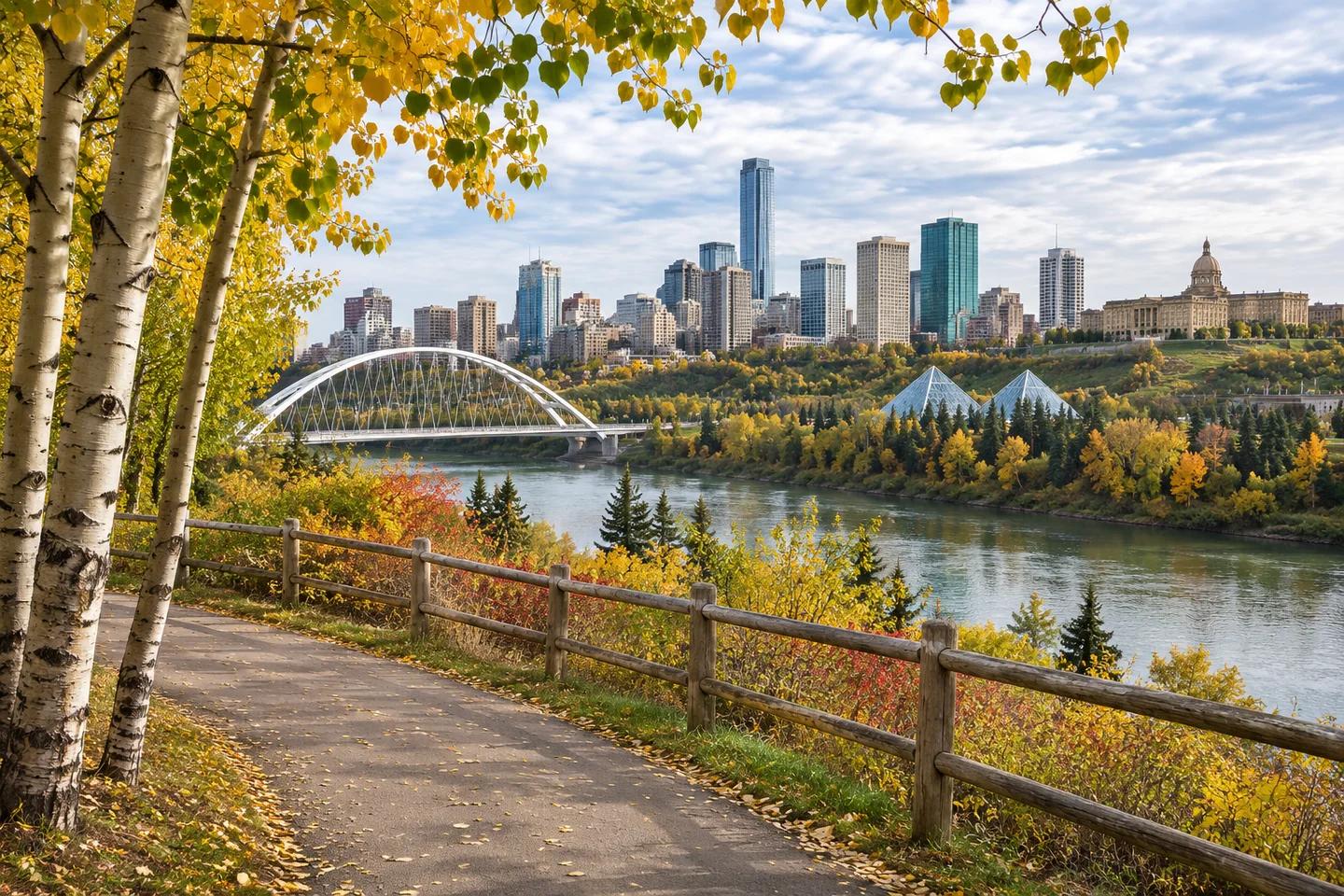
Much of it turns on the North Saskatchewan River valley, a busy summer festival calendar and indoor options for winter.
| Looking for | Where people look |
|---|---|
| Outdoors | River valley trails, Hawrelak Park and Elk Island National Park to the east |
| Universities and colleges | University of Alberta, MacEwan University and NAIT |
| Nightlife and events | Whyte Avenue, 124 Street, the Fringe festival and West Edmonton Mall |
| Nearby communities | St. Albert, Sherwood Park, Spruce Grove and Leduc |
| Mountains | Jasper is roughly a four hour drive west |
How cold is Edmonton in winter?
January averages a high of -5.8 degrees and a low of -14.7 degrees at the city's central station. July reaches an average high of 23.5 degrees.
| Measure | January | July |
|---|---|---|
| Average daily high | -5.8 °C | 23.5 °C |
| Average daily low | -14.7 °C | 12.6 °C |
Edmonton City Centre (Blatchford), 1991 to 2020 normals, Environment Canada figures as tabulated by Wikipedia. Annual snowfall averages 123.9 cm.
Ask about heated parking, window age and furnace service when you view a home. Those three details change a winter more than the neighbourhood name does.
Are winters harsh in Edmonton?
Yes. Expect months below freezing, short January days and cold snaps that make plug-in heating and a warm parking spot worth having.
Is Edmonton colder than Toronto?
Yes in January: the midpoint of Edmonton's average high and low is about -10.3 degrees, against a Toronto daily average of -5.5 degrees. The two come from different station records, so treat the gap as approximate.
Does it snow more in Calgary or Edmonton?
The totals are close, with Calgary's airport station at 138.7 cm a year and central Edmonton at 123.9 cm. Both are 1991 to 2020 averages, and one winter can differ widely.
What is the hottest month in Edmonton?
July, with an average high of 23.5 degrees and an average low of 12.6 degrees.
What will the move to Edmonton cost?
Distance and shipment size set the price. A two bedroom full-service move from Toronto sits in the same long-haul band as a move to Calgary.
- From Toronto (about 3,450 km)$4,550 to $7,050
- From Vancouver (about 1,160 km)$2,750 to $4,500
- From Calgary (about 540 km)$2,000 to $3,500
- From Winnipeg (about 1,300 km)$2,900 to $4,700
Planning ranges scaled from published long-distance quotes for a full-service move, before tax. Distances are approximate and a written quote is the only real price.
Cash to land in Edmonton as a renter
- First month of rent
- $1,320
- Deposit
- $1,320
- Movers, 1 bedroom from Toronto
- $3,475
- Temporary stay, 7 nights
- $1,260
- Total
- $7,375
Alberta allows a security deposit of up to one month of rent. The nightly rate is a starting assumption you should replace with a real booking.
How much is the final delivery within Edmonton?
Shipments held in storage, split deliveries and a later move to a purchased home are normally billed locally. Plan for the second move if you rent first.
The Edmonton moving cost calculator estimates crew time and truck costs for that local leg.
How do Alberta rules compare with every other province?
The table puts Alberta first, followed by the other nine provinces, across health, driving, renting and legal ages. Choose where you live now to move that province next to Alberta.
Scroll sideways to see all ten provinces. Alberta stays first.
| Rule | AlbertaMoving to | British Columbia | Saskatchewan | Manitoba | Ontario | Quebec | New Brunswick | Nova Scotia | Prince Edward Island | Newfoundland and Labrador |
|---|---|---|---|---|---|---|---|---|---|---|
| Health | ||||||||||
| When health coverage starts | First day of the third monthSource | Rest of arrival month plus 2 monthsSource | May begin the first day of the third monthSource | First day of the third month; military families exemptSource | No waiting periodSource | Up to 3 monthsSource | First day of the third month after the month you settleSource | Usually the first day of the third monthSource | First day of the third monthSource | Rest of arrival month plus 2 monthsSource |
| How you apply | Within 3 months, with ID, status and residency proofSource | Apply on arrival; adults get a Photo BC Services CardSource | Register for a health cardSource | Apply within 3 monthsSource | In person at ServiceOntario with 3 documentsSource | Register with RAMQSource | Online, by mail or at Service New BrunswickSource | Registration for Health Services form; no feeSource | Access PEI, with your old health card or birth certificateSource | Apply to MCP on arrival; no feeSource |
| Prescription drugs | Optional Non-Group Coverage; apply within 4 monthsSource | Income-based Fair PharmaCareSource | Not confirmed. Check with the province. | Pharmacare, with an income-based deductibleSource | Ontario Drug Benefit for 65+ and certain groups | Coverage mandatory, private or publicSource | NB Drug Plan if you lack other coverageSource | Family Pharmacare; separate seniors planSource | Generic and Catastrophic drug programsSource | Separate Prescription Drug Program; MCP excludes drugsSource |
| Ambulance bills | $385 with transport, $250 assessment onlySource | $80 for MSP membersSource | $245 to $325 plus $2.30 per kmSource | Billed to the patientSource | $45; $240 if not medically essentialSource | $125 plus $1.75 per km; often free at 65+Source | $130.60 with Medicare, $650 withoutSource | You may pay all or partSource | Billed; the rate depends on having a PEI cardSource | $115 with MCP, $650 withoutSource |
| Finding a family doctor | Alberta Find a Provider, or 811Source | Health Connect Registry, or 811Source | Not confirmed. Check with the province. | Family Doctor Finder, 1-866-690-8260Source | Health Care ConnectSource | Quebec Family Doctor FinderSource | Not confirmed. Check with the province. | Need a Family Practice Registry, or 811Source | Patient Registry, 1-855-563-2101Source | Patient Connect NL, 1-833-913-4679Source |
| Driving | ||||||||||
| Driver's licence | Within 90 daysSource | Within 90 daysSource | Within 90 daysSource | Within 3 monthsSource | Within 60 daysSource | Within 6 monthsSource | As soon as you establish residenceSource | 180 days (some older pages say 90)Source | Within 4 monthsSource | Within 3 monthsSource |
| Vehicle registration | Within 90 daysSource | Within 30 daysSource | Within 90 daysSource | Within 3 monthsSource | Within 30 daysSource | Within 90 daysSource | ImmediatelySource | Official pages differ, from 30 days; confirm earlySource | Not confirmed. Check with the province. | Within 90 daysSource |
| Vehicle inspection | May be required; ask a registry agentSource | Usually required; some Prairie exemptionsSource | Most vehicles need one before registrationSource | Required; valid BC, AB, SK, ON and QC certificates acceptedSource | Safety standards certificate requiredSource | Required for most used vehiclesSource | Within 14 days of registering; NS and PEI inspections acceptedSource | Within 10 days after registering a used vehicleSource | Annual; passenger inspections from NS and NB accepted until they expire or after a yearSource | Not confirmed. Check with the province. |
| Auto insurance | Private insurersSource | Public basic insurance (ICBC)Source | Basic SGI insurance requiredSource | Public Autopac (MPI)Source | Compulsory, private insurersSource | Public injury plan plus private liability of $50,000 or moreSource | Compulsory liability insuranceSource | Arrange before registeringSource | Proof of insurance requiredSource | Proof of insurance requiredSource |
| Winter tires | No province-wide mandateSource | Required on signed highways, Oct 1 to Apr 30 (some end Mar 31)Source | No province-wide mandateSource | No province-wide mandateSource | No province-wide mandateSource | Mandatory Dec 1 to Mar 15Source | No province-wide mandateSource | No province-wide mandateSource | No province-wide mandateSource | No province-wide mandateSource |
| Renting | ||||||||||
| Rental deposit | Up to one month, held in trustSource | Half a month, plus half for petsSource | Up to one month; half due at the startSource | Up to half a month | Last month's rent onlySource | No deposit beyond first month's rentSource | Up to one month, held by a government officeSource | Up to half a month, held in trustSource | Up to one monthSource | Up to three quarters of a monthSource |
| Rent increases | No cap; once every 12 monthsSource | 2.2% maximum in 2027Source | No cap; 12 months' notice (6 for association members)Source | 3.0% guideline in 2027, with exemptionsSource | 1.9% guideline in 2027; newer units exemptSource | No fixed cap; tribunal can set rentSource | 3% cap through 2027Source | 5% cap through 2027Source | 2% maximum in 2026; check 2027Source | No cap; 6 months' notice, once every 12 monthsSource |
| Other | ||||||||||
| Drinking and legal ages | 18Source | 19Source | 19Source | 18Source | 19Source | 18 for alcohol, 21 for cannabisSource | 19Source | 19Source | 19Source | 19Source |
Rules reviewed November 27, 2026 for moves between provinces; the territories are not included. Newcomers from outside Canada, students and temporary workers can face different rules, so confirm yours with the linked source.
How does Calgary compare if you are staying flexible?
Alberta's health, driving and rental rules apply to both cities. Housing costs and job markets are what separate them.
The plan for relocating to Calgary shows benchmark prices, utility costs and the salary figures to set against Edmonton's.
How do you move your mail and update your address?
Forward your mail before you leave, then update each government office separately. Changing it in one place does not change it everywhere.
| Who to tell | When | What to know |
|---|---|---|
| Canada Post | Before moving | Price depends on distance and term. Forwarding covers mail, not your records. |
| Canada Revenue Agency | Immediately | Benefit payments can stop if your address is out of date, even with direct deposit. |
| Service Canada | First month | OAS can be updated online. CPP needs a call or visit. |
| Elections Canada | First month | Check that your registration shows the new address. |
| Provincial health and licensing offices | On arrival | These are separate applications, not address changes. |
| Banks, insurers, employer, investments | First month | Payroll needs your new province to deduct the right tax. |
Keep a folder with passports or birth certificates, your old licence, health cards, immunization records, a lease or purchase agreement and a utility bill. Provincial offices ask for proof of identity, status and your new address.
How does healthcare work when you move to Alberta?
First day of the third month after you establish residency.
Keep your old health card and any private coverage until the new plan is confirmed.
How to get your health card
Apply within 3 months with proof of identity, legal status and Alberta residency.
Read the official page on how you apply.
Each family member needs to be registered, including children.
Prescription drugs
Optional Non-Group Coverage for under-65s. Apply within 4 months of moving so it starts with your health coverage.
Read the official page on prescription drugs.
Ambulance costs
Ground ambulance is billed: $385 with transport or $250 for assessment only, with a surcharge for non-residents. Some groups are exempt.
Read the official page on ambulance bills.
Finding a family doctor
Search Alberta Find a Provider for clinics taking patients, or call Health Link at 811.
Read the official page on finding a family doctor.
Ask your current doctor for enough refills to cover the search and for a copy of your records.
What do drivers have to do after moving to Alberta?
Get insurance, register and inspect the vehicle, and exchange your licence. The deadlines differ, so work from the shortest one.
Your Alberta arrival deadlines
- Provincial health coverageStarts October 1, 2027
Apply within 3 months. Coverage starts on the first day of the third month after you establish residency.
Official rule - Driver's licenceBy September 29, 2027
Exchange within 90 days.
Official rule - Vehicle registrationBy September 29, 2027
Register in Alberta within 90 days. Insurance is sold by private companies.
Official rule
For moves from another Canadian province, counted from your arrival date. Your residency date can differ, so confirm it with the office handling your file.
Driver's licence
Exchange within 90 days. Your old licence is surrendered.
Read the official page on driver's licence.
Registration and inspection
Register within 90 days with proof of ownership, ID and Alberta insurance.
Read the official page on vehicle registration.
An out-of-province inspection may be required. Ask a registry agent about your vehicle.
Read the official page on vehicle inspection.
Insurance
Private insurers. You need the pink card to register.
Do not cancel the old policy until the new one is active.
Winter tires
Not mandatory, but recommended for severe conditions.
Read the official page on winter tires.
- Bring your current licence, vehicle permit, bill of sale, lien or lease details and a driving abstract.
- Check open recalls and repair obvious defects before an inspection.
- Ask your old province what to do with plates and whether any fee or premium is refundable.
What housing rules apply in Alberta?
Up to one month's rent, held in trust. Damage deductions require move-in and move-out inspection reports.
Rent increase rules are separate, and they may differ sharply from what you are used to.
Deposits
Up to one month's rent, held in trust. Damage deductions require move-in and move-out inspection reports.
Read the official page on rental deposit.
Rent increases
No cap on the amount. Limited to once every 12 months.
Leaving your current home
Notice is governed by the province and lease you are leaving, not the one you are moving to. Give it in writing, keep proof and ask about assignment or subletting if your dates do not line up.
- Never send a deposit before someone you trust has seen the unit and you have checked who owns or manages it.
- Buying remotely? Make inspection, financing and document review conditions part of your plan with your lawyer or notary.
- Selling and buying across provinces means two sets of closing costs and two legal processes.
What can an Edmonton landlord do at renewal?
There is no percentage cap in Alberta, only limits on how often rent can change. Ask about past increases before you accept an attractive first-year figure.
Check notice and timing rules in the Alberta rent increase calculator.
How does an Edmonton purchase unfold?
Conditions, condo documents and possession dates need to fit around your arrival. A clear sequence prevents a rushed decision during a short visit.
That matters even more if your visit lasts only a few days and a seller expects a quick answer. Plan the viewing trip around it.
The steps to buying a house in Edmonton explain the order from budget to keys.
How does moving affect taxes, benefits and work?
You generally pay provincial income tax for the whole year to the province where you live on December 31. That applies even if you arrive late in the year.
Can you deduct moving expenses?
You may, if your new home is at least 40 km closer to a new job, business or full-time post-secondary program. Read the CRA moving expense rules and keep every receipt.
Amounts your employer reimburses and does not tax cannot be claimed again.
Benefits and credits
Provincial benefits and credits change with your province. Update the Canada Revenue Agency promptly and compare your next payment notice with the old one.
Licensed jobs and trades
Certified workers can generally be recognized in another province under Canadian labour mobility rules, but you usually have to apply to the new regulator first. Fees, insurance, background checks or a local law exam can apply.
Pay and payroll
Ask whether your salary changes with location and confirm your employer can employ you in the new province. Check the first pay stub for the correct provincial deductions.
What should families arrange before moving to Edmonton?
Start child care and school contact before you choose the final address if you can. Spaces and catchments can decide which homes are practical.
- Contact the school division for your address with birth, residency and immunization records. Designated schools can differ between neighbouring streets.
- Child care spaces are run by individual operators, so call several before you move.
- Transfer special education plans, medical action plans and custody documents. Ask the new school what it needs before the first day.
What do you need to set up in Edmonton?
Utilities first, then the municipal rules for pets, parking and property. These are set locally and often surprise new arrivals.
Utilities and building access
- You choose your electricity and natural gas retailer, or you are served by the default retailer. Compare plans with the Utilities Consumer Advocate.
- Arrange service about two weeks before possession.
Pets, parking and property rules
- Every cat and dog over six months old needs a City of Edmonton pet licence, renewed yearly. The fine for not having one is $250.
- Households are limited to three dogs and six cats.
- Check the City's winter parking rules for your street before the first snowfall.
What do people forget when moving to Edmonton?
The expensive surprises are usually local rules and timing gaps. Check these before you commit to a date or a home.
- Winter tires are not required, but a car that struggles on ice is expensive in other ways. Price a set into your first year.
- An apartment can be cheap to buy and costly to hold, so review condo fees and reserve funds.
- A ground ambulance ride is billed. Keep coverage during the health card wait.
| Often forgotten | Why it matters |
|---|---|
| Overlap between homes | Two rents, or rent and a mortgage, can run in the same month |
| Open medical referrals | A specialist referral may not carry over, so ask before you leave |
| Wills and powers of attorney | Family and estate law differ by province |
| Moving coverage | Basic liability may pay far less than replacement value |
| Warranties and memberships | Some end or cost money to cancel when you move |
| Two-step verification | Changing your phone number can lock you out of banking and government accounts |
| Delivery delays | Pack medication, documents and a few days of essentials yourself |
Edmonton moving checklist: what to do and when
Work down the timeline and switch off anything that does not apply. Provincial deadlines are included where they could be confirmed.
Your moving checklist
Switch off anything that does not apply. Ticks are saved in this browser only.
Download PDF checklistThe printable version includes every item, for use offline.
What if Edmonton is not your only option?
Comparing destinations side by side is easier before you commit to a lease, a start date or a mover. Rent, salary needs, winter and provincial deadlines can differ widely.
If your plans are still open, the overview of moving across Canada lines up nine cities and all ten provinces. Use it to test Edmonton against a second choice, then return to this checklist once the destination is settled.
How do you choose an Edmonton agent?
Local experience matters most where winter condition, condo fees and community differences affect value. Ask each candidate for evidence from your target areas.
Use these questions on choosing a real estate agent in Edmonton to compare them fairly.
The bottom line
Edmonton's case is simple: lower prices than most large Canadian cities in exchange for a long winter. Verify the monthly carrying cost of the specific home, not just the sticker price.
This page is general information, not legal, tax or financial advice. Confirm rules and prices with the linked source or a licensed professional before you act.